

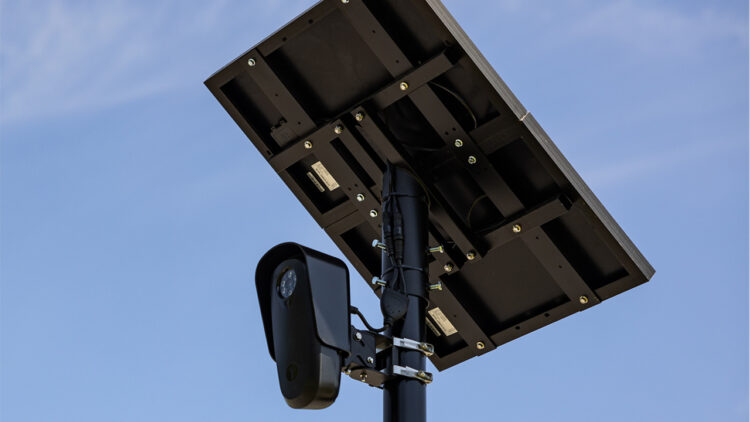
TALLAHASSEE — The Florida Department of Transportation on Monday revoked every active permit allowing local police and sheriff’s offices to keep automated license plate readers in state highway rights of way, and said it will not issue new ones.
Agencies have 30 days to take the devices down. After that, FDOT said it will remove whatever is left. The department also reserved the right to pull any unit immediately if it creates a safety problem.
The Engineering and Operations memorandum was signed by Will Watts, FDOT’s chief operating officer and assistant secretary. It followed comments last week from Gov. Ron DeSantis, who called the spread of the cameras “out of control.”
“The recent exponential increase in deployments along our roadways, coupled with concerning reports of misuse, data privacy concerns and surveillance schemes merit immediate action to preserve Floridians’ sovereignty and quality of life,” the memo said.
The order covers Flock Safety cameras and other license plate readers sitting in the right of way of the State Highway System. That includes stretches of U.S. 1, State Road A1A, State Road 60 and Interstate 95 through Indian River County. It does not apply to cameras on city or county roads, private property, or mobile readers used by the Florida Highway Patrol.
What it means here
Indian River County Sheriff’s Office, Sebastian Police Department, Vero Beach Police Department and Indian River Shores Police all use the technology.
Sheriff Eric Flowers told Sebastian Daily the agency monitors about 140 fixed Flock cameras but technically operates a little over 100 of them. Sebastian police have placed cameras on U.S. 1, Roseland Road, County Road 512, Barber Street and Schumann Drive. Vero Beach police bought six Flock units last year, including sites on Aviation Boulevard and Indian River Boulevard. Indian River Shores has cameras along A1A and Jungle Trail.
How many of those sit inside FDOT right-of-way has not been publicly tallied. Any that do must come down by late September.
Flowers has repeatedly defended the system. After deputies used license plate data this month to help track a Vero Beach homicide suspect to West Virginia, Flowers said, “Without Flock, I’m not standing here four days later telling you about this guy being in custody.” He has called the cameras a “game-changer” for stolen cars, missing-person cases and violent crime.
The cameras also figured in a fatal hit-and-run in Vero Beach this month. A 48-year-old man riding an e-bike was struck Aug. 9 near Eighth Street and 14th Avenue. Investigators were looking for a light-colored Ford F-150, believed to be a 2015 to 2020 model, with a missing passenger-side mirror. An analyst in the Sheriff’s Office Real Time Crime Center found a matching truck on Flock cameras, identified the plate and passed the information to the Florida Highway Patrol, which located the vehicle and tied it to the crash.
He told Sebastian Daily the cameras also clear people, not just identify suspects.
“The only thing that doesn’t get talked about enough is how often we are able to use this technology to exonerate people,” Flowers said. “The same people who are upset about law enforcement using cameras to catch bad guys are the same people who demanded every law enforcement officer wore a body camera on every call.”
Palm Bay, in southern Brevard County, ran into a different problem earlier this month. City Manager Matthew Morton and Police Chief Jeff Spears took the city’s Flock system offline Aug. 7 and hooded the cameras after a preliminary review found Flock Safety may not have followed city permitting and installation rules.
“When questions are raised about a system that affects public safety and public confidence, we have an obligation to stop, examine the facts and make sure everything has been done properly,” Morton said. Officials restored the cameras Aug. 24 after saying each site had been checked and met city requirements.
How the cameras work
The Flock devices photograph passing vehicles and log plate numbers, color, make, model, direction of travel, time and markings such as dents or bumper stickers. That information goes into a searchable law enforcement database. Supporters say it shortens investigations. Critics say it records everyone, not just suspects, and has been misused by officers to track former partners.
DeSantis, speaking Aug. 26 at Florida International University, said he supports giving police tools to catch criminals but does not want Florida to become “a surveillance state.”
“Go after criminals — great, let’s all do that,” he said. “But surveilling just regular Floridians’ movements, and how that data’s used, that’s a bird of a different feather.”
FDOT said previous permits were temporary general-use approvals, typically written for five years. Those approvals “are hereby revoked.” The department will “cease the issuance of all future requests for LPR systems within its jurisdictional authority.”
Cameras on local streets and private lots can stay unless a city, county or the property owner decides otherwise.
