
SEBASTIAN — A living shoreline is now in place along the south side of Coconut Point at Sebastian Inlet State Park.
The Sebastian Inlet District and park staff call it the Coconut Point Shoreline Resilience Project. Crews finished the work Sept. 10 on about 200 feet of eroded Indian River Lagoon bank.
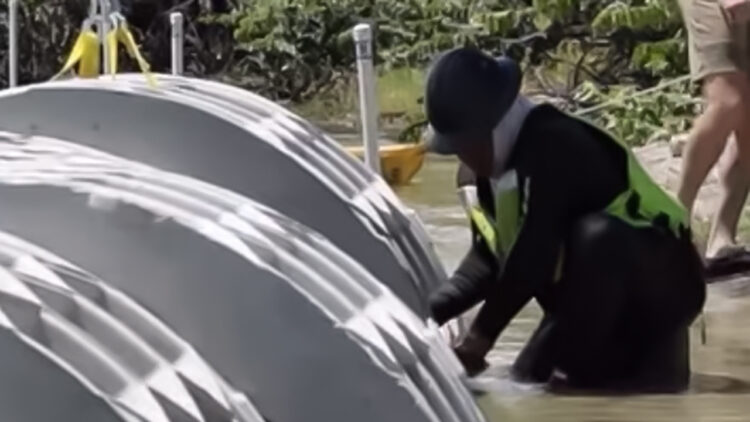
Reef Arches LLC set honeycomb-shaped reef modules along the shore and planted red mangroves. The district’s project materials list 22 reef arches and up to 90 seven-gallon mangroves.
The idea is to knock down wave energy without a seawall. The modules are meant to hold the bank, give fish and oysters a place to settle, and let the mangroves take hold.
The Vero Beach nonprofit Ocean Research & Conservation Association (ORCA) paid for seven of the arches and about half the plants. ORCA is using volunteer citizen scientists to watch the site for at least three years.
“We’re seeing accelerated erosion of natural shorelines in the Indian River Lagoon, which leads to habitat loss as well as water quality deterioration among other things,” ORCA research associate Natalie Stephens said. “We utilize our citizen scientists to really look at what is happening over time and how a project is improving the shoreline.”
A $95,000 cost-share grant from the Florida Department of Environmental Protection’s Resilient Florida Program is covering most of the billed work. The inlet district’s cash match is about $7,900 for permitting and construction certification. Reef Arches and the mangrove group MANG put up the rest as in-kind support.
Partners on the job are the Inlet District, Sebastian Inlet State Park, ORCA, and Reef Arches.
Similar living shorelines have gone in at Castaways Point Park and at the Marine Resources Council’s Ted Moorhead Lagoon House in Palm Bay. ORCA has also been tracking oyster reef balls at Riverview Park in Sebastian.