

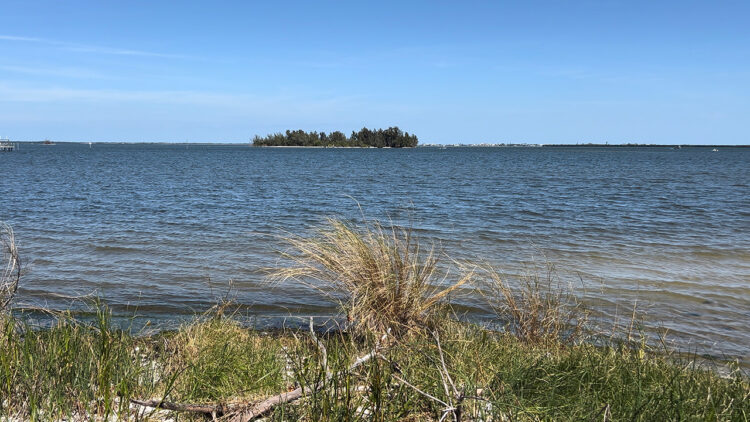
SEBASTIAN — Dissolved oxygen in the Indian River Lagoon at Sebastian stayed above the fish-stress threshold before dawn Friday, but salinity has fallen sharply and the water flowing into the lagoon is both fresher and lower in oxygen, according to the City of Sebastian Natural Resources Board.
The 6 a.m. reading at the IRL-SB-WQ station in Sebastian showed 5.68 milligrams per liter of dissolved oxygen at 72.74% saturation. That is above the board’s 5.0 mg/L watch line and well above the 4.0 mg/L danger line. Oxygen held steady overnight, the report said, so there is no fish-kill risk at Sebastian this morning.
Salinity is the bigger concern at the same station. Salinity measures how much salt is dissolved in the water. Full seawater is about 35 practical salinity units. The Sebastian station dropped to 7.10 PSU from 27.52 PSU on Nov. 2. The lagoon water there is now mostly fresh, a prolonged stress for oysters, clams and seagrass that cannot move away from it.
“Fish are breathing fine at Sebastian today, but salinity has crashed to 7.1 from 27.5 on Monday, which is the real stress on oysters, clams and seagrass,” said Charles Stadelman, chair of the Natural Resources Board. “Just south of Vero Beach at Link Port, oxygen dropped to 3.89 mg/L this morning — below the danger line.”
The Link Port station (IRL-LP-WQ) read 3.89 mg/L at 52.25% saturation at 6 a.m. That is below the danger line and is the lowest oxygen reading among stations reporting Friday morning. Fort Pierce showed healthier oxygen at 5.41 mg/L but higher turbidity.
ORCA Kilroy stations in the Sebastian area, checked late Thursday, showed the quality of the inflow. Sebastian DWP read 2.94 mg/L dissolved oxygen with salinity near zero. The IRF Main Relief Canal read 4.06 mg/L oxygen, 2.87 PSU salinity and 13.4 NTU turbidity. The water entering the lagoon is low in oxygen and essentially fresh.
Turbidity measures how cloudy the water is from suspended particles such as sediment. At the Sebastian lagoon station itself, turbidity was low at 1.88 NTU, so the water looked clear. Farther south and in the canal, readings were much higher — 13.63 NTU at Fort Pierce and 13.4 NTU in the IRF Main Relief Canal — indicating murkier water with more sediment moving through.
Nitrate, a nutrient that can fuel algae growth, was elevated at the Sebastian station at 9.38 micromolar (0.131 milligrams of nitrogen per liter). That is roughly triple the level from Nov. 2 and is described in the report as bloom fuel in the warm water once conditions settle. No algae bloom was showing yet; chlorophyll readings remained low.
The board’s overall call for the wider area is caution: fish are OK at Sebastian today, fish are stressed at Link Port, and shellfish at Sebastian remain under freshwater stress until salinity recovers. The report is a watch, not a harvest closure. Harvesters should check official Florida Department of Agriculture and Consumer Services shellfish area status before taking oysters or clams and use extra caution after flooding, when runoff can also carry bacteria.
Elevated nitrate, high colored dissolved organic matter and warm water temperatures are also being watched as conditions that could favor algae once the system settles.
Several monitoring stations are offline. Every IRLON water-quality station north of Sebastian — Malabar, Banana River and Titusville — returned “No recent observations,” as did Jensen Beach and St. Lucie to the south. Of nine IRL stations, only three were fully reporting Friday morning. Vero Beach was partial. Stadelman said the same report went to Felicia Gordian at the city and to the IRLON team at FAU Harbor Branch.
The board noted that the pre-dawn reading is the one that most clearly shows fish-kill risk and that it will continue those checks. Recovery of salinity is the main item to watch for shellfish and seagrass.