

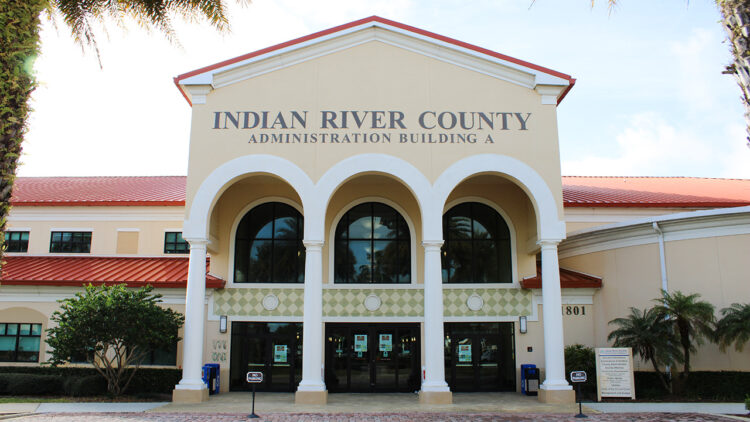
INDIAN RIVER COUNTY — Sebastian Vice Mayor Bob McPartlan, Indian River County Commissioner Laura Moss, and Taxpayers Association of Indian River County President Lance Lunceford have publicly opposed Amendment 3, the statewide constitutional measure on the Nov. 3 ballot that would raise the homestead exemption on non-school property taxes.
McPartlan, who is also a County Commission District 2 candidate, said at a recent candidate forum that he does not support the amendment as written because there is no back-up plan. In a statement to Sebastian Daily, he expanded on his position:
“I support meaningful tax reform, but I do not support the property tax amendment as currently written. It was developed quickly and without thorough analysis of its fiscal impact on Florida’s 67 counties. There is also no clear contingency plan to address the resulting revenue shortfalls,” McPartlan said.

Lance Lunceford, president of the Indian River County Taxpayers Association, called the plan “an unsound, unplanned piece of public policy,” on June 12th in an interview with WPTV News.
He points out this will in reality lead to a tax shift onto businesses and consumers through other County fees and a larger tax burden on commercial non-homesteaded property.
“When you increase taxes on businesses, you increase taxes on everybody.” Lunceford said
“They’ve declared war on local government,” Moss said of the lawmakers in Tallahassee who advanced the proposal.
The amendment would increase the non-school homestead exemption from the current $50,000 to $150,000 in 2027 and $250,000 in 2028. County and city officials project tens of millions in lost ad valorem revenue once the higher exemptions take full effect.
Sebastian City Manager Brian Benton has said any shortfall would have to be made up somewhere — potentially through higher taxes on non-homestead property or new fees for services.
Residents who oppose the measure have told Sebastian Daily they worry about cuts or reductions to local services. Supporters of the amendment counter that those warnings are overstated and that the measure delivers meaningful tax relief to homeowners without eliminating core functions.
Officials and residents who object note that property-tax revenue currently supports a range of county and municipal functions, including youth sports facilities and parks maintenance, senior programs such as Meals on Wheels and adult day care, elections administration, property and land records, drainage and stormwater work, vital statistics, public-health inspections, veterans services, court operations, and animal control. They argue that shifting more control of funding decisions to the state level reduces local flexibility.
Amendment 3 also lowers the annual assessment-growth cap on non-homestead properties from 10% to 5% and restricts how remaining property-tax dollars can be spent. Under the measure, local governments would be limited to using ad valorem revenue for a defined list of “core” purposes that includes public safety, education, infrastructure, natural resource projects, existing debt service, employee retirement benefits, and the operations of constitutional officers and local governing bodies. It requires 60% voter approval to pass.
A recent analysis by the Florida Policy Institute notes that property taxes make up the largest share of county revenue in nearly half of Florida’s counties and fund a wide range of services, including public safety, emergency management, parks, libraries, and constitutional officers. The Institute estimates that eliminating non-school homestead property taxes could reduce county revenue by 2% to 24%. Local officials in Indian River County project a significantly higher impact under the higher homestead exemptions in Amendment 3.
The Florida League of Cities has separately projected that full elimination of homestead property taxes would cut local governments’ property tax revenue by nearly 38% on average.
The Florida Policy Institute and other analysts also point out that reducing the tax base on homesteaded properties would likely shift more of the remaining burden onto non-homestead properties such as rental units and commercial buildings. While the amendment would lower the assessment growth cap on those properties, it would not prevent local governments from raising millage rates. Critics of the measure say that shift could lead to higher costs for renters, consumers, and businesses.
There has been significant discussion and conflicting claims about the measure on social media. County and city officials have encouraged residents to review Amendment 3 and speak with local leaders.
