

GAINESVILLE — As Halloween nears, Florida’s spiders are stepping into the spotlight, not as villains but as misunderstood heroes of the ecosystem, according to experts at the University of Florida.
Spiders often evoke fear, but many species in the Sunshine State are shy, harmless and essential for pest control, said Lisa Anne Taylor, an assistant research scientist at the University of Florida Institute of Food and Agricultural Sciences.
“They get a bad rap and aren’t so frightening,” Taylor said. “No one should be afraid of them.”
Taylor highlighted 10 standout spider species in Florida that blend spooky aesthetics with ecological benefits. Instead of dreading them, she encourages residents to appreciate their roles as natural hunters and silk producers.
The black widow tops the list as the classic Halloween icon, with its jet-black body and red hourglass marking. Native southern and northern varieties live in Florida, but these shy spiders rarely bite unless disturbed, such as in hidden spots like shoes.
“Nobody should be scared of them; they should just not hold them. They should keep a respectful distance,” said Taylor, who works in the Department of Entomology and Nematology.
Their venom can harm humans and animals, though bites remain uncommon.
The brown recluse, often blamed for bites, is actually rare in Florida. Most reported sightings are misidentifications, Taylor explained.
“They get blamed for a lot of things, but it’s rarely actually a brown recluse bite,” she said.
Florida’s native red widow stands out with its black body accented by red and white splotches and bright red legs. Exclusive to the state’s scrub habitats, it’s elusive and seldom bites, adding a mysterious beauty to local biodiversity.
The brown widow is an invasive spider related to the black widow, with a dark orange hourglass mark on its brown belly and spiky egg sacs. Its venom appears less potent for humans, and it avoids aggression, preferring secluded areas. Taylor advises checking shoes and gear for these and black widows.
The golden silk orb weaver, also called the banana spider, spins big, shiny golden webs that stretch across gardens and forests. The females can get quite large and show off colors like gold, white, and black, making them look like natural decorations.
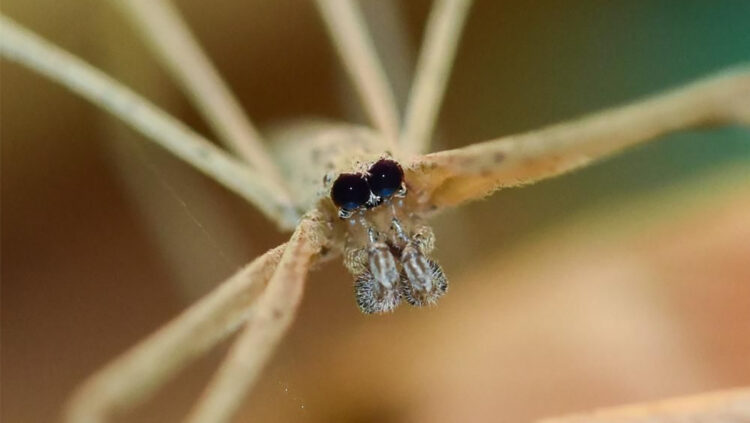
The ogre-faced spider has something really weird. It has massive eyes and a special way of throwing a net to catch its food in the dark. It hangs still during the day and looks just like a twig before becoming a sneaky hunter at night.
The regal jumping spider charms with iridescent green or pink jaws and colorful patterns. Curious by nature, it’s popular online and even kept as pets.
“They’ve become internet famous,” Taylor said, adding that their size makes them suitable for small terrariums.
The green lynx spider camouflages in foliage with its vibrant green body and spiny legs. Common in gardens, it hunts pests without threatening humans.
The twin-flagged jumping spider, a tiny leaper, uses silk lines like bungee cords. Harmless to people, it’s a terror to ants.
“If you’re an ant, these are ferocious predators,” Taylor said. “They’re completely harmless to people, but they’re ant specialists.”
Rounding out the list, the spitting spider shoots sticky glue to ensnare insects, echoing comic-book heroes. Small and secretive, its method ranks among the arachnid world’s most unique.
For families, Taylor offers a kid-friendly coloring book, “Coloring with Spiders: Our Favorites from Florida.”
The University of Florida Institute of Food and Agricultural Sciences develops knowledge on agriculture, human and natural resources to improve quality of life. It operates more than a dozen research facilities, 67 county extension offices and includes the College of Agricultural and Life Sciences.
