

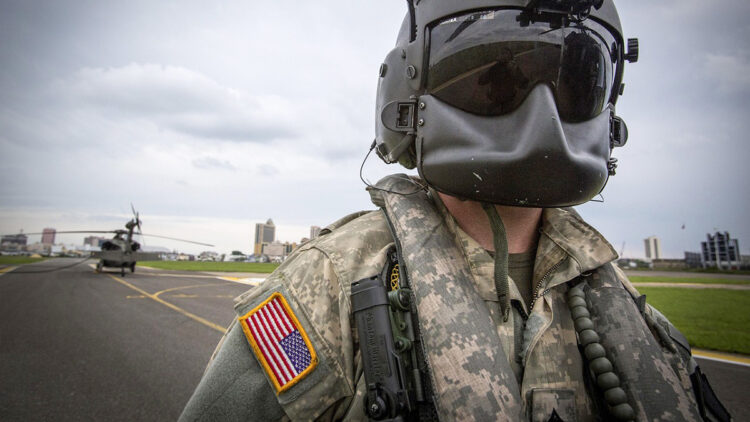
WASHINGTON — Active-duty troops are poised to miss their next paychecks unless Congress acts swiftly to resolve the ongoing government shutdown, military officials and lawmakers warned Friday.
(Editor’s Note: A few days after this article was published, President Donald Trump directed the Pentagon to use “all available funds” to pay troops.)
The Defense Department confirmed that service members’ mid-month pay, due Oct. 15, would be withheld for days worked during the shutdown if lawmakers fail to reach a deal or pass targeted legislation. While troops would eventually receive back pay once funding is restored, the delay could strain families already living paycheck to paycheck, exacerbating financial pressures in military communities from Virginia to Colorado.
“This is about more than money—it’s about trust,” said Heather Campbell, an Air Force spouse in Alabama whose family is bracing for the hit. “You’re asking us to put our lives on the line, and you’re not even going to give us our paycheck? There’s a lot of broken trust there.”
The shutdown, triggered by a lapse in federal funding earlier this month, has left more than 1.5 million civilian federal employees working without immediate compensation and another 620,000 furloughed. Essential workers like air traffic controllers have reported higher absenteeism, leading to flight delays at several U.S. airports. The House passed a short-term funding bill on Sept. 19 to extend operations through Nov. 21, but Senate Democrats have blocked it seven times, demanding negotiations on expiring health insurance tax credits that could spike premiums for millions.
House Speaker Mike Johnson, R-La., insisted in an interview that the lower chamber has “done its job” and won’t reconvene before the Senate acts on the Republican measure. “We have already voted to pay the troops,” Johnson said. “We did it three weeks ago.”
But pressure is mounting from both parties for a standalone vote on the Pay Our Troops Act, a bipartisan bill introduced by Rep. Jen Kiggans, R-Va., a former Navy helicopter pilot. The legislation, H.R. 5401, has 148 cosponsors and would ensure on-time pay for military personnel, Defense civilians, contractors and Coast Guard staff. Nearly 80 House Democrats urged Johnson in a letter to bring it to the floor early next week, while Rep. Elise Stefanik, R-N.Y., broke with GOP leadership to demand action.
Senate Democrats, meanwhile, floated broader proposals to cover essential federal workers beyond the military. Sen. Ron Wyden, D-Ore., suggested a new tax on billionaires to fund immediate pay for troops and air traffic controllers, saying lawmakers could expand it to others. “I don’t want folks to miss a paycheck, but I don’t want just the military not to miss a paycheck,” said Sen. Gary Peters, D-Mich. “We have TSA agents—go down the list.”
Not all Democrats agree. Sen. Ruben Gallego, D-Ariz., prioritized troops but called the situation for civilians “tough choices,” noting service members are often underpaid compared to their federal counterparts.
President Donald Trump voiced support for ensuring military pay, telling reporters “that probably will happen—we’ll take care of it.” But his administration has warned of no guaranteed back pay for federal workers and threatened permanent cuts to programs it deems supportive of “Democrat initiatives.”
Aid groups are stepping in where they can. Army Emergency Relief and similar organizations offer zero-interest loans, while nonprofits urge banks and utilities to waive fees for affected families. Still, advocates warn of broader ripples: reduced spending in base-heavy economies, eroded military readiness and potential retention issues.
Amanda Scott, an Air Force spouse in Colorado Springs, Colo., asked how ready one is if they don’t know if they can feed their family, adding that a lot of these service members can go out and make much more in the civilian sector.
The Senate adjourned Thursday without progress and won’t return until Tuesday, while the House remains on recess until Oct. 14. With payday looming, families like Campbell’s are turning to credit cards and cutting back, highlighting the human cost of Washington’s gridlock.
The shutdown marks the nation’s third in 12 years.
