

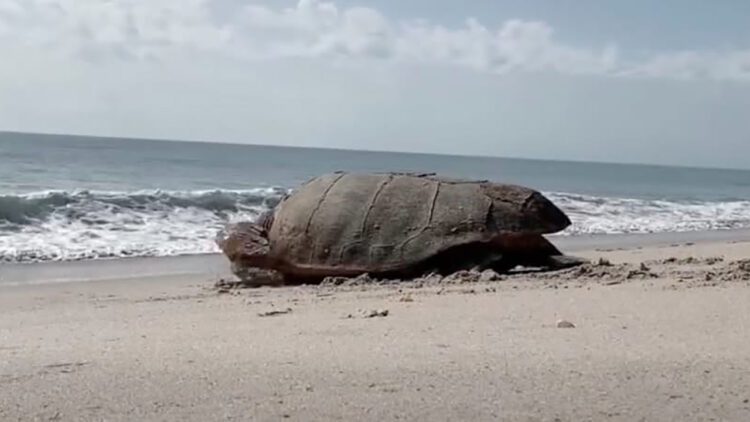
INDIAN RIVER COUNTY — Sea turtles deposited a record 14,083 nests along the county’s 22.4-mile coastline this season, officials said, topping the previous high by roughly 2,000 nests.
The total, current as of Oct. 22, breaks down to 10,045 loggerhead nests, 3,970 green turtle nests and 68 leatherback nests, according to the county’s coastal monitoring program. Loggerheads made up the large majority.
“This is actually a really big deal because what we’re seeing is decades of conservation paying off,” Coastal Specialist Dakota Whalen said.
She pointed to the loggerhead numbers as particularly striking. “They’re dominating with 10,000 nests across our entire coastline, which is an insane number,” Whalen said.
County crews mark about one in 10 nests for closer checks on hatching success. Marking every nest would leave almost no open sand for beachgoers, she said. “If we mark 14,000 nests, you wouldn’t have anywhere to sit on the beach… And like seriously it would be a sea of orange.”
Most nests had already hatched before recent rough weather moved through. A nor’easter and king tides eroded sections of beach and sent high water across some remaining nests, stripping sand and exposing eggs in places. Whalen estimated that 75% to 90% of the county’s nests had hatched before the storms arrived.
“A lot of them have already hatched out, a lot of them have made it to the water safely,” she said.
The official nesting season ends Oct. 31. Some nests — especially later green turtle nests — may still be incubating after that date. Unsafe beach conditions have delayed surveys to assess storm damage.
The county has tracked nests under a Habitat Conservation Plan since 2005, working with partners including Ecological Associates, Sebastian Inlet State Park, the Sebastian Inlet District, Archie Carr National Wildlife Refuge, and Coastal Connections. Officials credit long-term monitoring, lighting rules, beach-cleanup efforts and protections in the water for the steady rise in numbers over the past two decades.
Beachgoers can still help remaining nests and any late hatchlings by keeping the sand clean, flat, and dark; removing gear and filling holes before leaving; and limiting artificial light after dark. If you find exposed eggs or disoriented hatchlings, leave them in place and call the Florida Fish and Wildlife Conservation Commission’s Wildlife Alert Hotline at 888-404-3922.
