

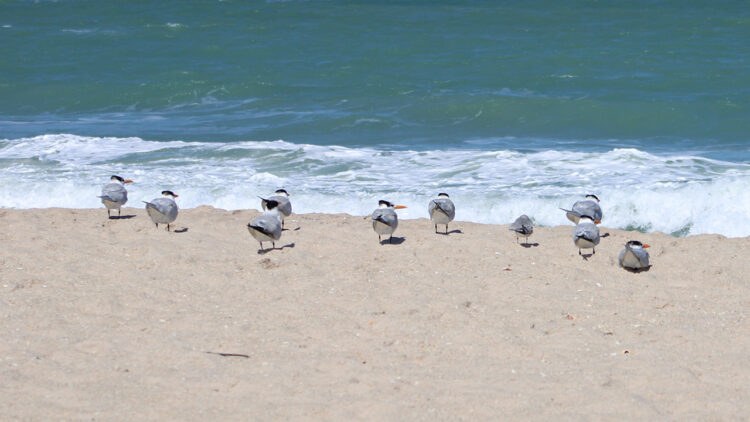
SEBASTIAN — As Florida’s shorebirds, seabirds and wading birds begin to breed and nest, state wildlife officials are urging visitors to the coast to take simple steps to protect its vulnerable species — steps that will increase their chances of successfully raising young.
The Florida Fish and Wildlife Conservation Commission noted the critical role of beaches and shorelines as nesting habitat for these species, which can begin nesting as early as mid-February in parts of the state. Shorebirds and seabirds often nest in sandy scrapes, with their camouflaged hatchlings susceptible to human activities; wading birds such as herons tend to breed in mangrove colonies offshore.
“Anyone enjoying time near the shore can play a big part in their conservation,” the commission said in a statement.
Among that advice: For those who want to minimize their disturbances:
- Make sure you check on Critical Wildlife Area closures before you head out. These specific sites, which can be established on beaches or coastal islands, safeguard high numbers of nesting birds. Boaters and beachgoers should be aware of these signs, keep their distance and noise down so as not to stress the animals.
- Give nesting birds plenty of space: Keep at least 300 feet away. Avoid walking through groups of birds; as an adult flushes, eggs and chicks are exposed to the weather and predators.
- Do not bring pets, or leave them at home; if they join you at dog-friendly beaches, keep them leashed and away from birds. Even trained dogs can alarm birds into abandoning nests.
- Secure trash and fishing line to avoid attracting predators, such as raccoons or crows. Get all gear off the beach by night, and use monofilament recycling stations for discarded line that can ensnare wildlife.
Nesting dates differ by species and region, with some birds initiating nest building in March or April near the beaches at the Sebastian Inlet.