

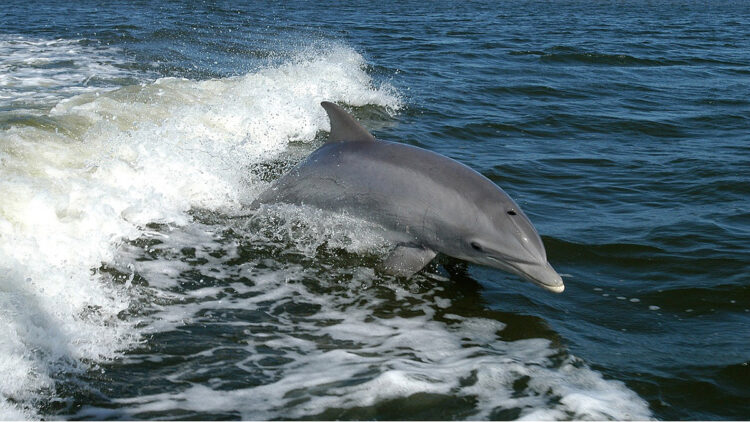
BREVARD COUNTY — A neurotoxin produced by harmful algal blooms in the Indian River Lagoon is causing brain changes in bottlenose dolphins that mirror those found in humans with Alzheimer’s disease and chronic traumatic encephalopathy, a new study reveals, raising fresh concerns about the environmental risks.
The research, published Sept. 30 in the journal Communications Biology, examined brain tissue from 20 common bottlenose dolphins that stranded along the lagoon’s shores between 2010 and 2019. Scientists detected elevated levels of the toxin 2,4-diaminobutyric acid — known as 2,4-DAB — in all samples, but concentrations were 2,900 times higher in dolphins that beached during peak algal bloom seasons from June to November, compared to cooler months.
These harmful blooms are caused by extra nutrients washing into the water, mainly from fertilizers and sewage. This triggers the release of cyanobacteria and other tiny organisms that create a powerful brain poison. Dolphins eat a lot of polluted fish every day, so the toxin builds up in their brains and seems to speed up the breakdown of brain tissue.
Lead author David A. Davis, a toxicologist at the University of Miami’s Miller School of Medicine, said the findings position dolphins as “environmental sentinels” for toxin exposures that could affect human health. “Since dolphins are considered environmental sentinels for toxic exposures in marine environments, there are concerns about human health issues associated with cyanobacterial blooms,” Davis said in a statement accompanying the study.
The study documented sweeping genetic changes in the dolphins’ brain transcriptomes, with 536 genes differentially expressed between bloom and non-bloom seasons. Downregulated genes pointed to impaired GABAergic synapses — critical for neuron communication — while upregulated ones suggested damage to the blood-brain barrier’s basement membrane. All dolphins showed hallmark pathologies of neurodegeneration, including amyloid-beta plaques, phosphorylated tau tangles and TDP-43 protein inclusions, which are signatures of Alzheimer’s and CTE in people.
CTE, often seen in athletes with repeated head injuries, involves similar tau and TDP-43 buildup, leading to cognitive decline, memory loss and behavioral changes. In dolphins, researchers observed disoriented behaviors before stranding, such as swimming in circles — behaviors that echo the confusion seen in human dementia patients.
Co-author Wendy Noke Durden, a research scientist at Hubbs-SeaWorld Research Institute in Melbourne, emphasized the role of long-term sample archives in uncovering these patterns. “By leveraging our multi-decadal sample archive, established with support from NOAA Prescott Marine Mammal Rescue Assistance Program, we were able to connect harmful algal bloom neurotoxins with molecular and pathological changes in dolphin brains,” she said.
The Indian River Lagoon is a 156-mile estuary stretching along Florida’s east coast and has suffered from recurrent algal blooms amid rising temperatures and pollution. State records show a 3.3-degree Celsius average annual increase in water temperatures over the past 25 years, exacerbating the problem.
The study authors wrote that as our climate warms, HABs will continue to intensify, and that understanding the impact of HAB exposures will help to identify populations at risk for neurological illnesses.
The research team included scientists from the University of Miami, Hubbs-SeaWorld Research Institute, Brain Chemistry Labs in Wyoming and Blue World Research Institute.
Environmental advocates say the study provides a strong case that runoff needs to be addressed to restore the lagoon’s ecosystem. Florida Gov. Ron DeSantis has allocated millions for lagoon restoration projects, but critics argue more measures are needed to curb the blooms.
