

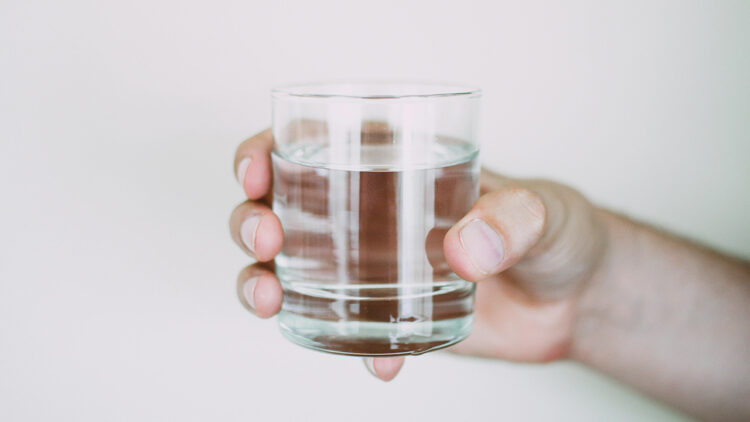
VERO BEACH — The EPA has found perfluorooctane sulfonate, a so-called forever chemical known as PFOS, in Vero Beach’s drinking water at 8.4 parts per trillion — more than double the federal maximum contaminant level of 4 ppt.
City officials said the water remains safe to drink despite the exceedance reported in the latest federal testing data released this month.
PFAS chemicals have been widely used since the 1940s in products such as nonstick cookware, food packaging, stain-resistant clothing, and firefighting foam, and do not break down naturally. Exposure has been linked to cancer, immune system suppression, developmental delays in children, and other health problems.
Vero Beach ranks among 15 percent of U.S. water systems serving 10,000 or more people that exceed the EPA’s updated PFAS limits, which went into effect in 2024. The city first began testing for these chemicals in 2013 and found nothing at the time. Since then, though, more sensitive lab methods have detected trace amounts that earlier tests couldn’t.
Rob Bolton, director of the Vero Beach Water and Sewer Department, said the chemicals have been present in the environment for decades. He noted that pretty much all Americans have been exposed to them their entire lives and that they are in our blood.
The city draws its water from 26 wells located on property surrounding Vero Beach Regional Airport. About half comes from the protected Floridan Aquifer, while the remainder is pumped from shallower surficial aquifers, 80 to 100 feet deep, which are more susceptible to surface contamination.
Officials pointed to possible sources, including firefighting foam used during airport training exercises and legacy pollution from industrial products. Another potential contributor is the former South Gifford Road Landfill, located just north of the airport. The unlined site operated from 1960 to 1977 and accepted a variety of wastes.
Gary Roderick, a former administrator with the Florida Department of Environmental Protection, said landfills, airports, military installations, and industrial sites are the most common sources of PFAS contamination.
The city currently blends roughly half Floridan Aquifer water with half surficial aquifer water. Treatment includes coagulation, nanofiltration, lime softening, and chloramine disinfection, but none of these processes remove PFAS.
To reduce levels, Vero Beach plans to drill three additional Floridan Aquifer wells, shifting the blend to 60% deep aquifer water initially and eventually to 70%. The city has also allocated $250,000 for a study evaluating advanced treatment technologies, such as granular activated carbon and ion-exchange filtration. Any major upgrades are not expected before 2029 and would likely be financed through low-interest state loans.
No PFAS were detected in Indian River County’s public water system. However, the Fort Pierce Utilities Authority and portions of St. Lucie County Utilities reported exceedances in recent EPA data.
The EPA requires water systems to complete initial monitoring by 2027 and comply with the new limits by 2029. Nationwide, utilities are facing potentially billions of dollars in treatment costs.
