

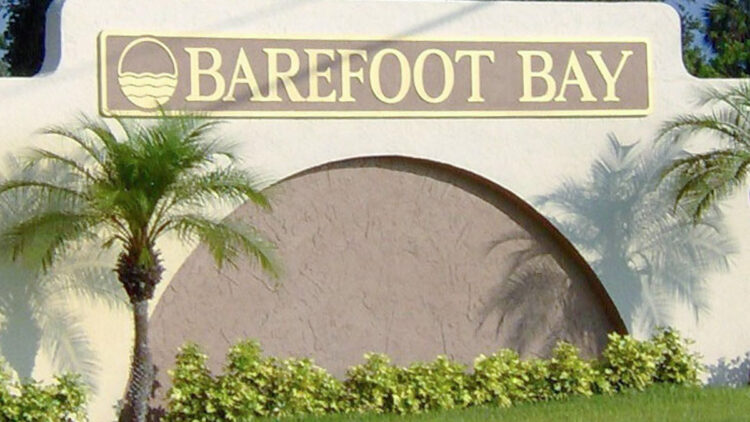
MICCO — Tests on water samples from Barefoot Bay in Brevard County turned up levels of cancer-linked forever chemicals above federal safety caps, prompting local officials to weigh public alerts and system fixes, county documents indicate.
Recent testing at the Barefoot Bay water treatment plant detected per- and polyfluoroalkyl substances, or PFAS, above the Environmental Protection Agency’s new maximum contaminant levels set in 2024. The chemicals, which do not break down easily in the environment, were found in concentrations measured in parts per trillion — tiny amounts that still raise health concerns under the stricter EPA guidelines.
Brevard County commissioners will address the issue at a meeting this week, focusing on how to inform residents and tackle the contamination in affected systems, including Barefoot Bay and the Mims plant in the north. “It’s a very small amount, but it’s enough to concern us,” said Brevard Commissioner Katie Delaney from District 1.
The findings emerge against a backdrop of widespread worries over PFAS in Florida, with the state’s Department of Environmental Protection sticking to federal guidelines but lacking its own binding restrictions. Florida officials plan to meet the EPA’s 4 parts per trillion threshold for major PFAS types by 2027. For now, places such as Barefoot Bay must contend with outcomes from standard checks mandated by state and national regulations.
PFAS, often called forever chemicals for their persistence, have been linked to increased risks of cancer, immune system issues, and other health problems. They stem from sources like firefighting foams, industrial discharges, and consumer products, seeping into groundwater over the decades. In Brevard, possible contamination sources include historical uses near military bases and industrial sites, though exact origins for the Barefoot Bay detections remain under review.
Residents in the impacted zones got notices via social media updates and area activist groups, urging swift moves. The county’s utility crew stated in their 2024 water report that even though most pollutants hit the marks, PFAS figures call for scrutiny, particularly with upcoming rules kicking in.
Brevard officials said they are exploring filtration technologies to reduce PFAS, but upgrades could cost millions and take years. In the interim, some residents are turning to home filtration systems or bottled water.
Statewide, PFAS detections have surfaced in dozens of water systems, from springs in central Florida to urban supplies in Tampa and beyond. environmental activists urge faster state-level rules, arguing that the EPA’s limits, while a start, leave gaps in addressing thousands of related compounds.
No immediate health warnings have been issued for Barefoot Bay, but officials recommend residents stay informed through county updates as testing continues.
