

SEBASTIAN — The city of Sebastian has scheduled several workshops for residents this week over a potential $4.7 million budget deficit that could lead to new user fees and special assessments if Florida goes ahead with eliminating or drastically capping property taxes.
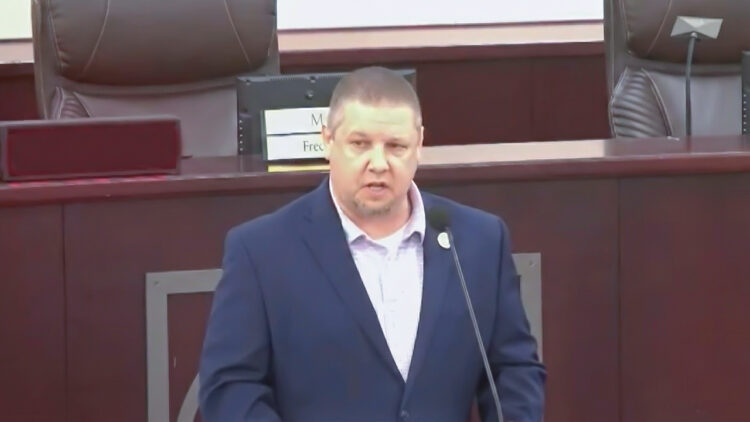
City Manager Brian Benton detailed a “sobering” roadmap for how the city would continue to provide core services if it lost about 24 percent of its general fund — the main account that pays for police, parks and road maintenance.
Benton said cutting property taxes may sound like good news for homeowners, but the costs would probably be passed on to those least able to pay.
To make up for lost revenue, the city may raise taxes on non-homestead properties like rentals and commercial buildings. But, Benton said, these costs seldom remain with the owners.
“The property owner is then going to pass that increase along to those tenants,” Benton said, noting that many local rentals qualify as affordable or attainable housing. “Same thing with commercial taxes. If they go up, who’s going to bear the brunt of that? Everyone that uses that commercial property.”
New Fees for “Free” Services
Residents who live in Sebastian have enjoyed free access to boat ramps and youth sports facilities over the decades. That era could change if the funding structure does.
Because some of the city’s boat ramps were constructed with grant money, the city is legally unable to charge a fee to launch a boat. But Benton said the city is considering a “trailer parking fee” as an alternative.
Youth sports programs, including Little League, Pop Warner football, and cheerleading, also face a new reality. Currently, these organizations use city fields at no cost, keeping registration fees low for families.
“If this were to occur, it would be one of the first things we’d examine,” Benton said. “Those fees [for residents] have now gone up because the city is going to have to charge a user fee for using those fields over each of the seasons.
The city is also exploring “special assessments” for infrastructure. And unlike a general property tax, these would be district-specific.
In such a model, the city could charge residents for road paving or street lighting only if those services were performed directly in their neighborhood. While common in other Florida municipalities, it would mark a shift in how Sebastian manages its public works
With the general fund heavily dependent on personnel, Benton admitted that a $4.7 million cut cannot be achieved without impacting the city’s workforce.
“What does that mean? I can’t tell you today,” Benton said, though he listed potential options including furloughs or reduced hours of operation for city hall.
While the city recently entered a new union contract with the police department, Benton warned that a hard cap on funding could eventually squeeze the department. “We don’t cut police services, but it may not be an increase into the funding,” he explained, noting that other departments would likely have to take deeper cuts to protect public safety budgets.
A Race Against the Ballot
The workshop was held now because of strict state laws. Once a referendum regarding tax changes is officially placed on the ballot, city staff are statutorily prohibited from spending funds to advocate for or against it.
“Our goal today is to provide you all this information… before we know what’s going to be on the ballot,” Benton said. “Decisions involve trade-offs between taxes and service levels. With this, there’s no doubt there would be service level reductions.”
Residents can watch a replay of the workshop by going here: https://youtu.be/o_IlBS64Fb0?t=1733.
