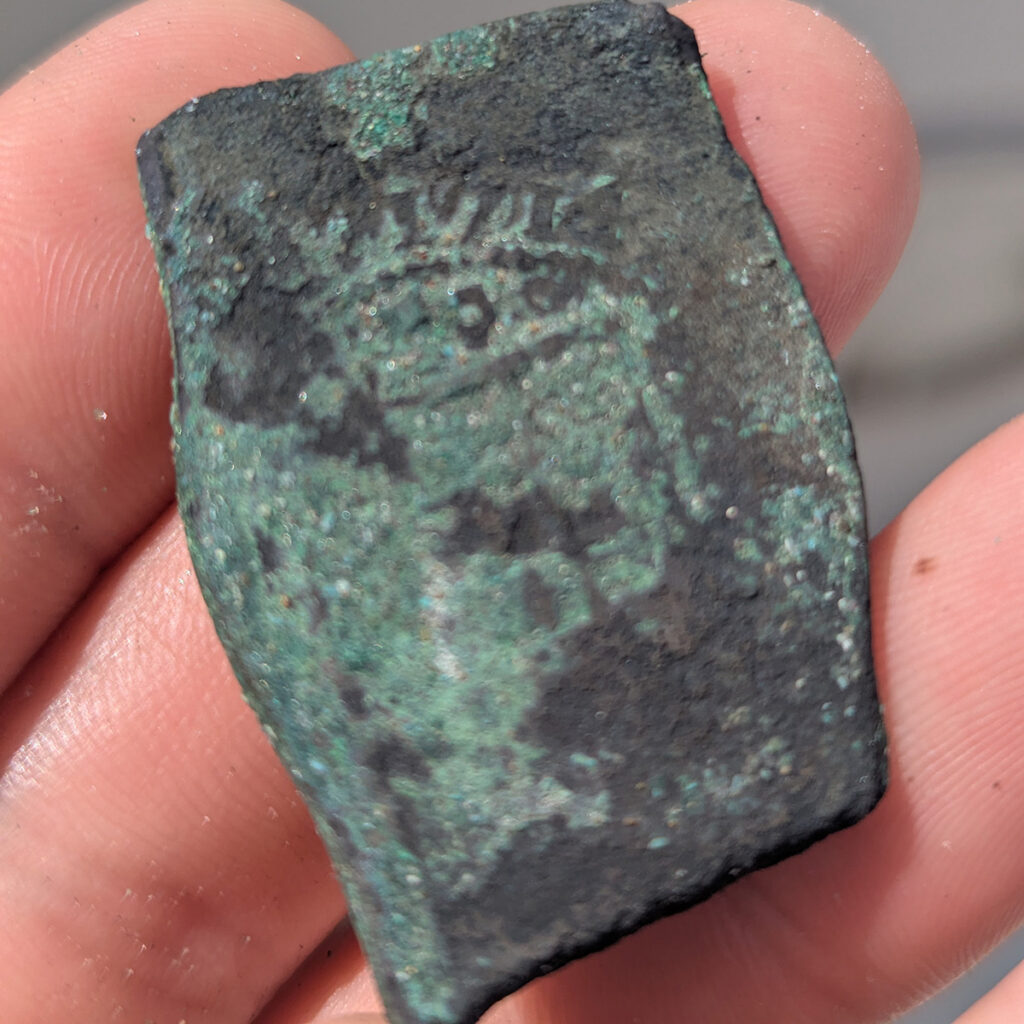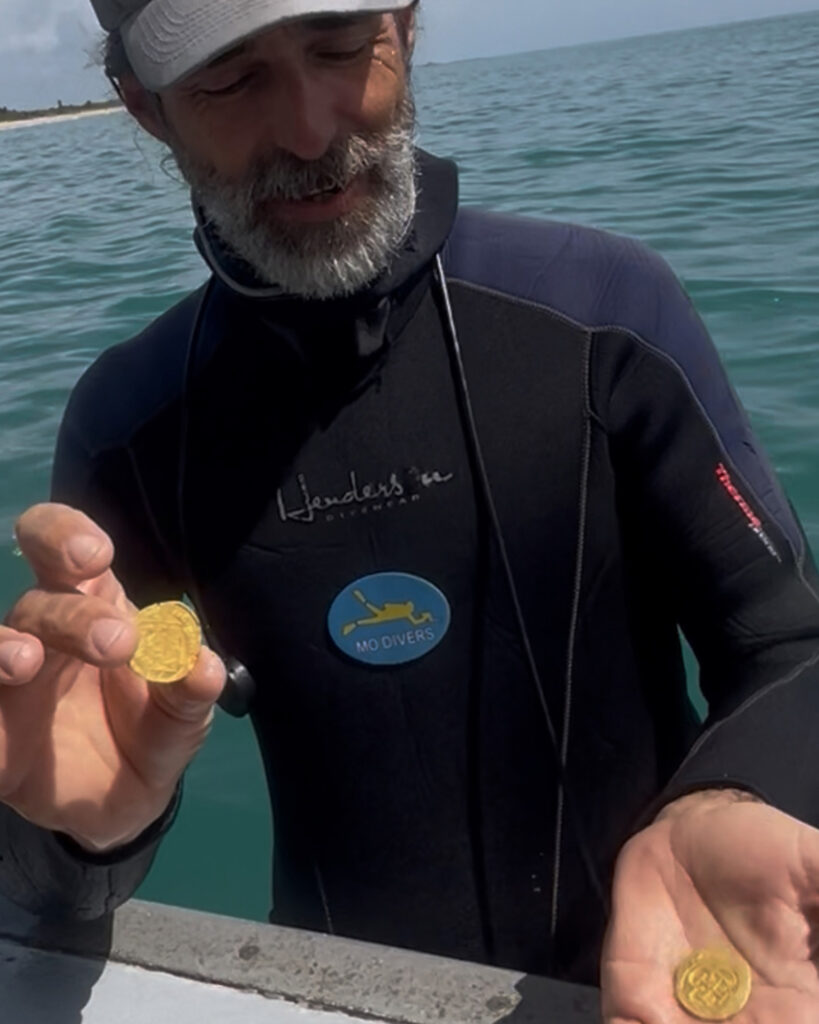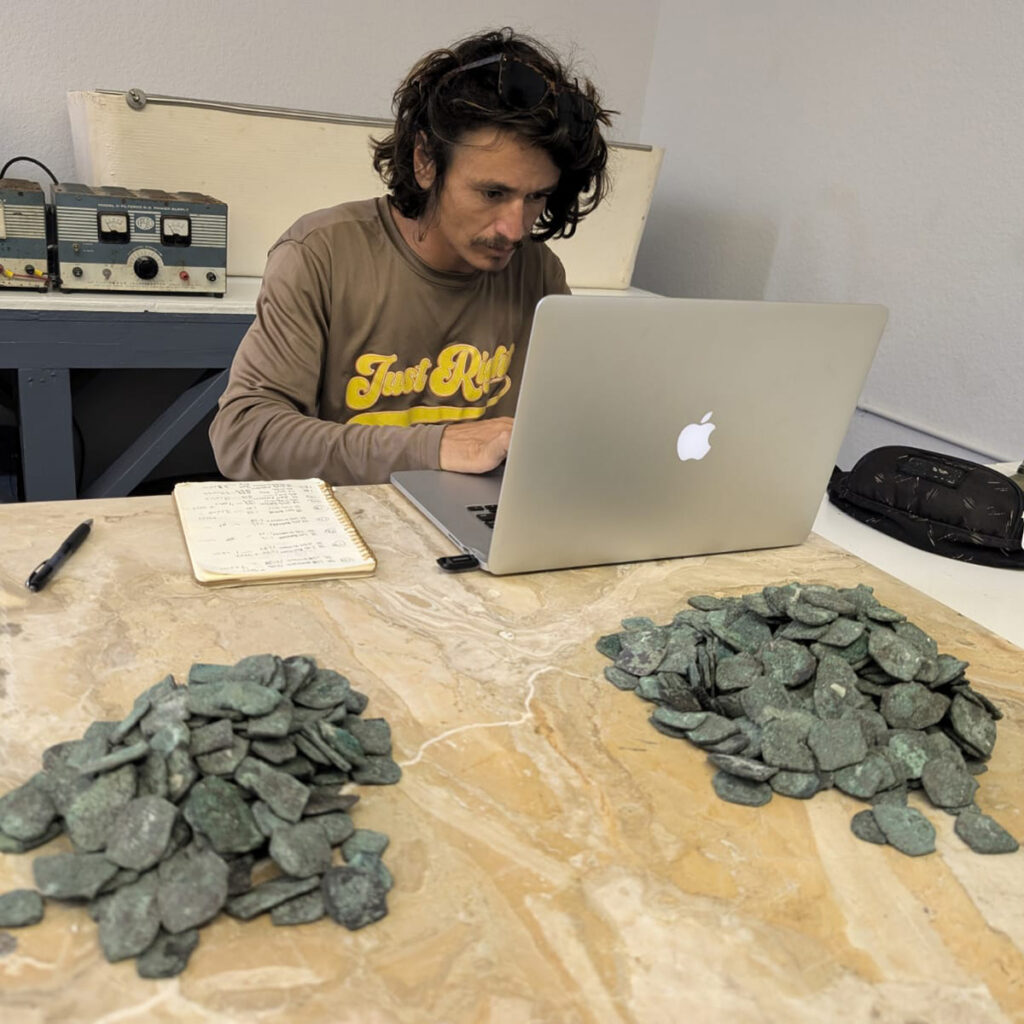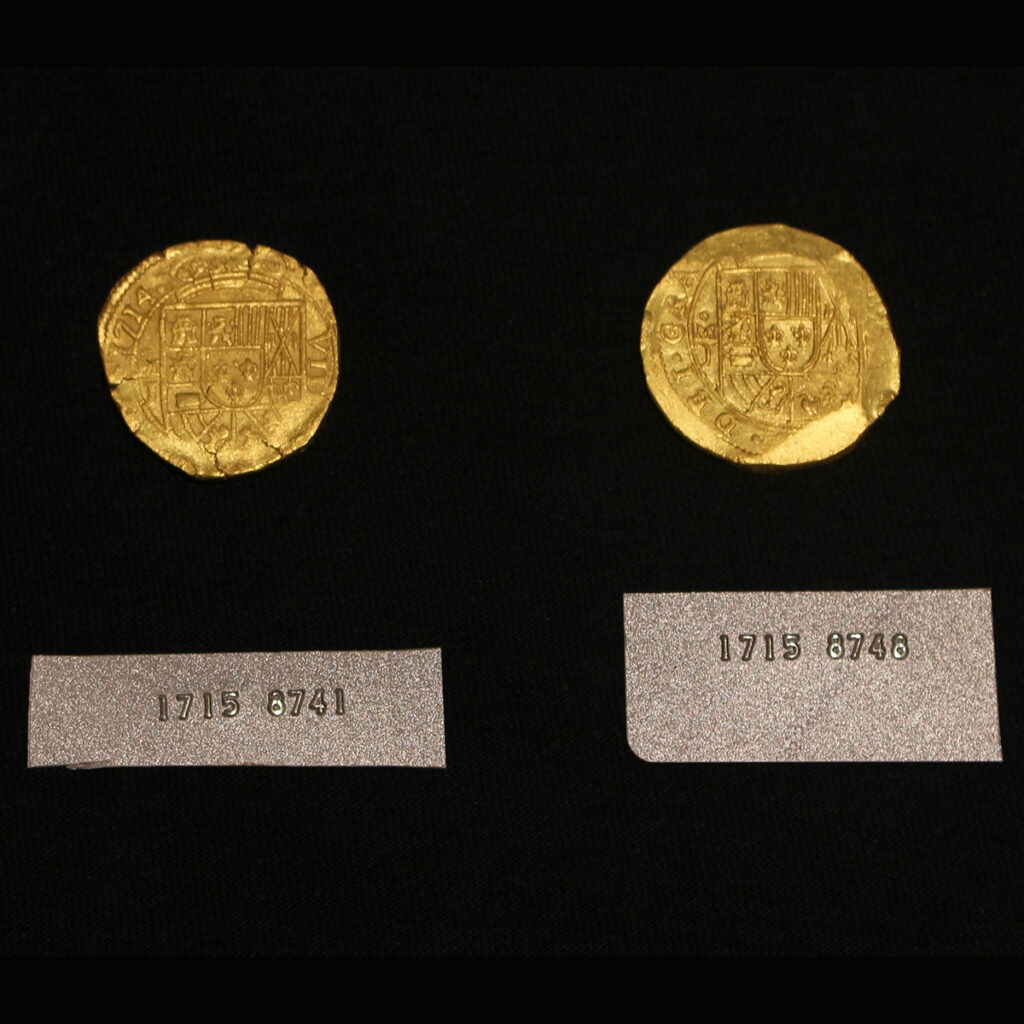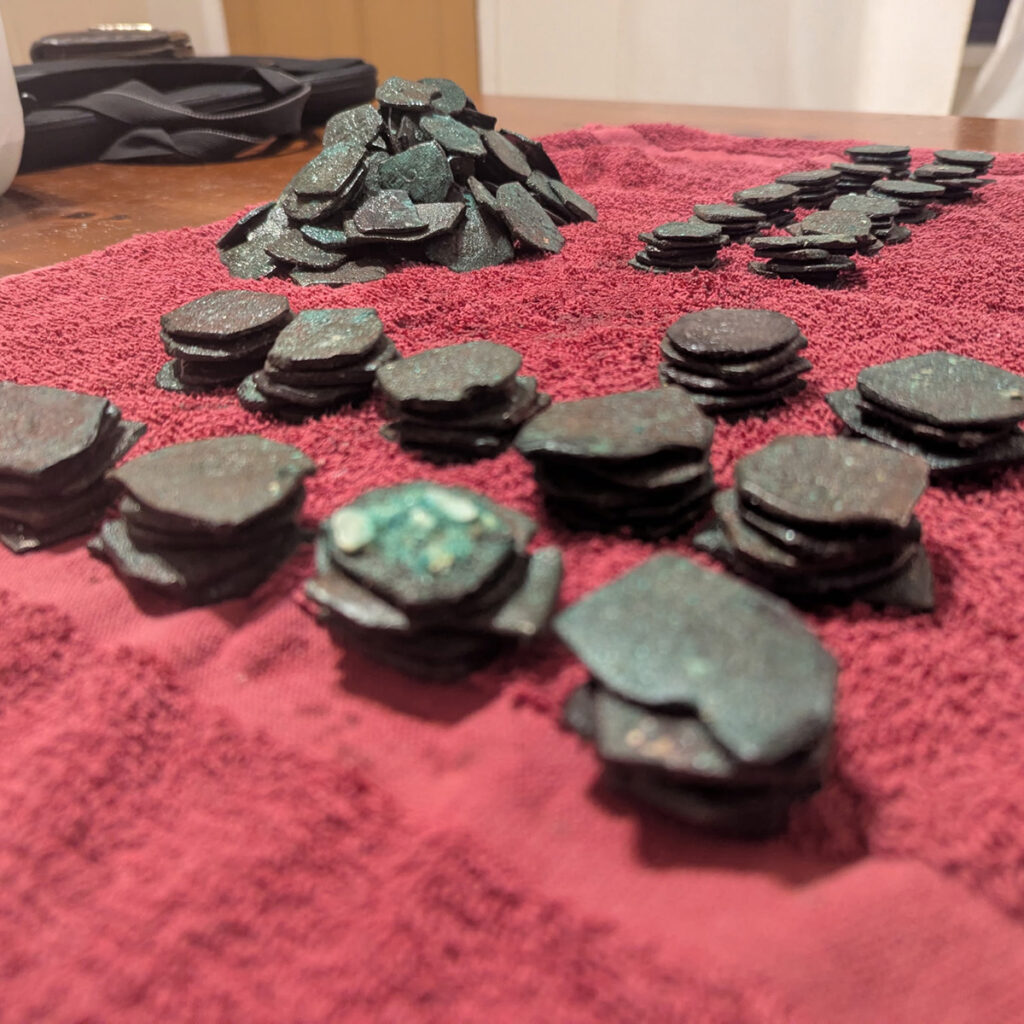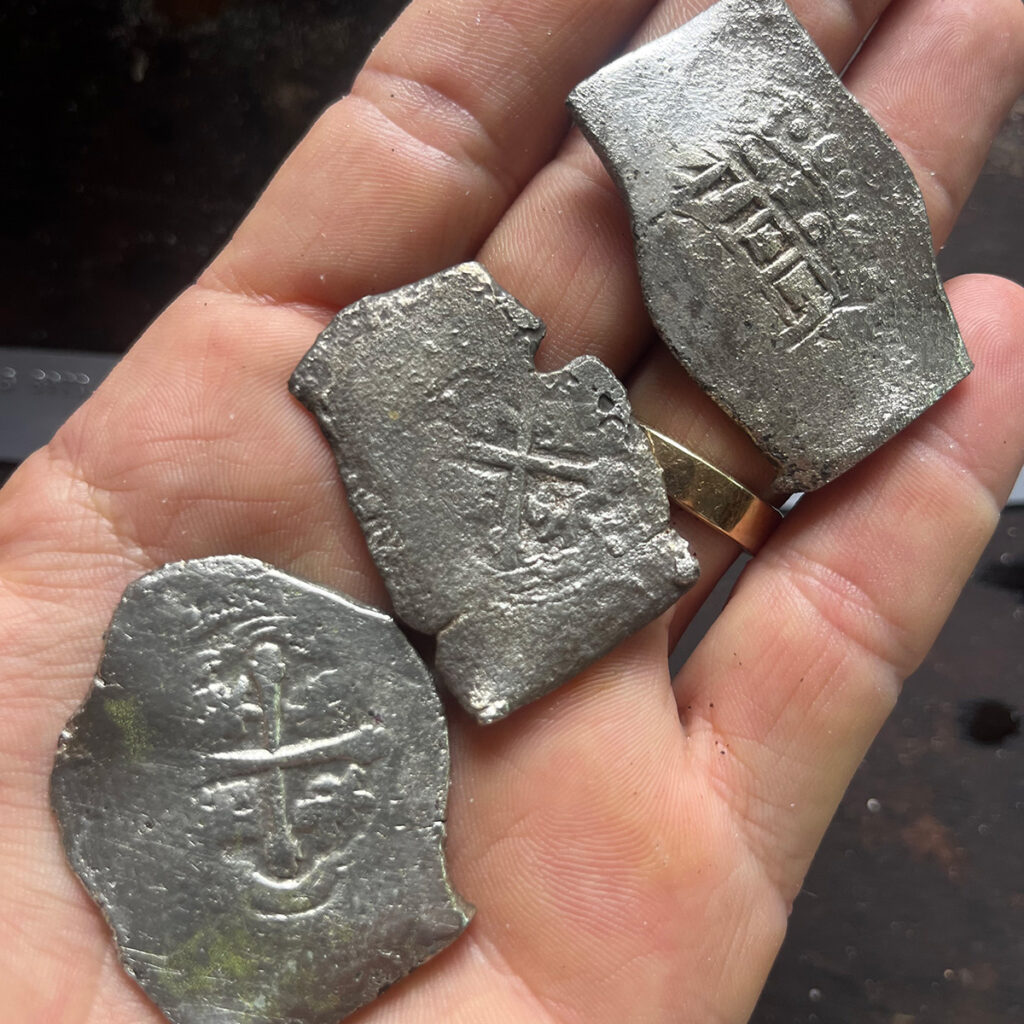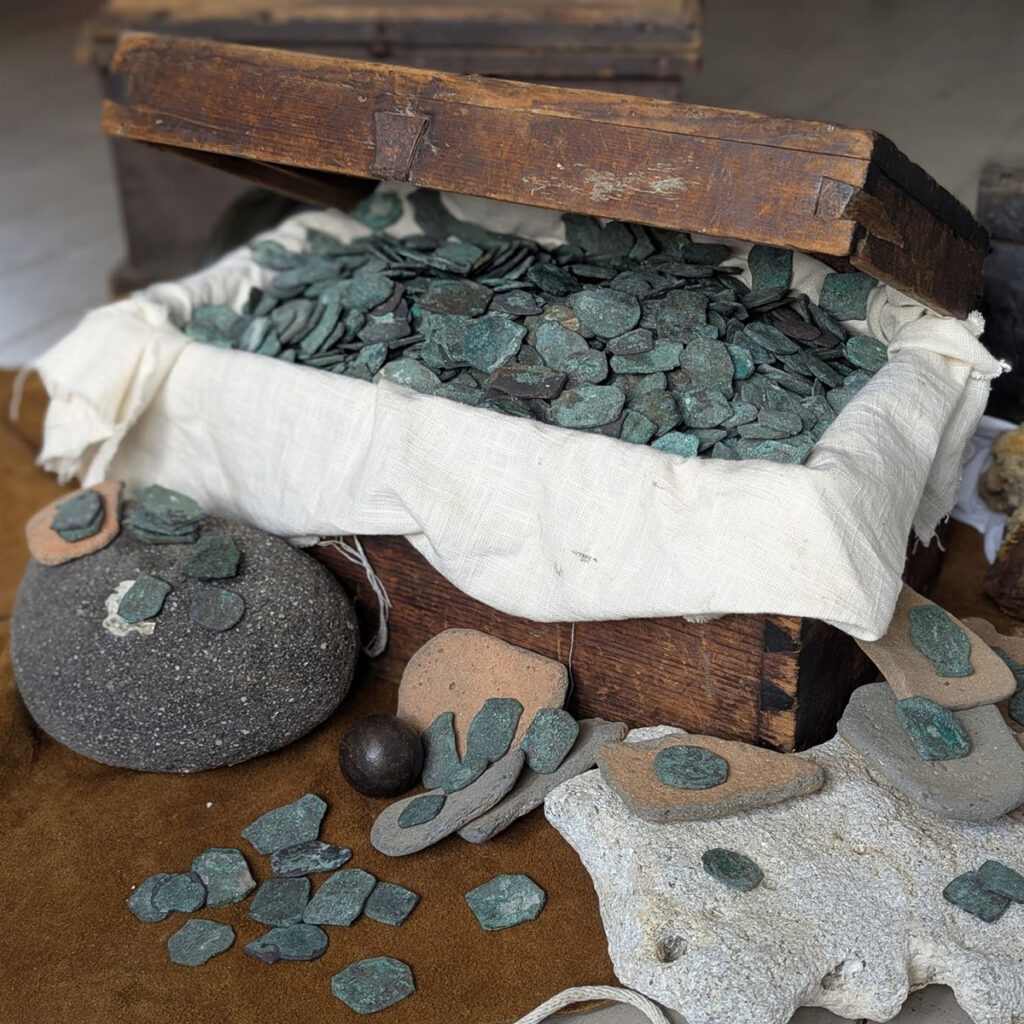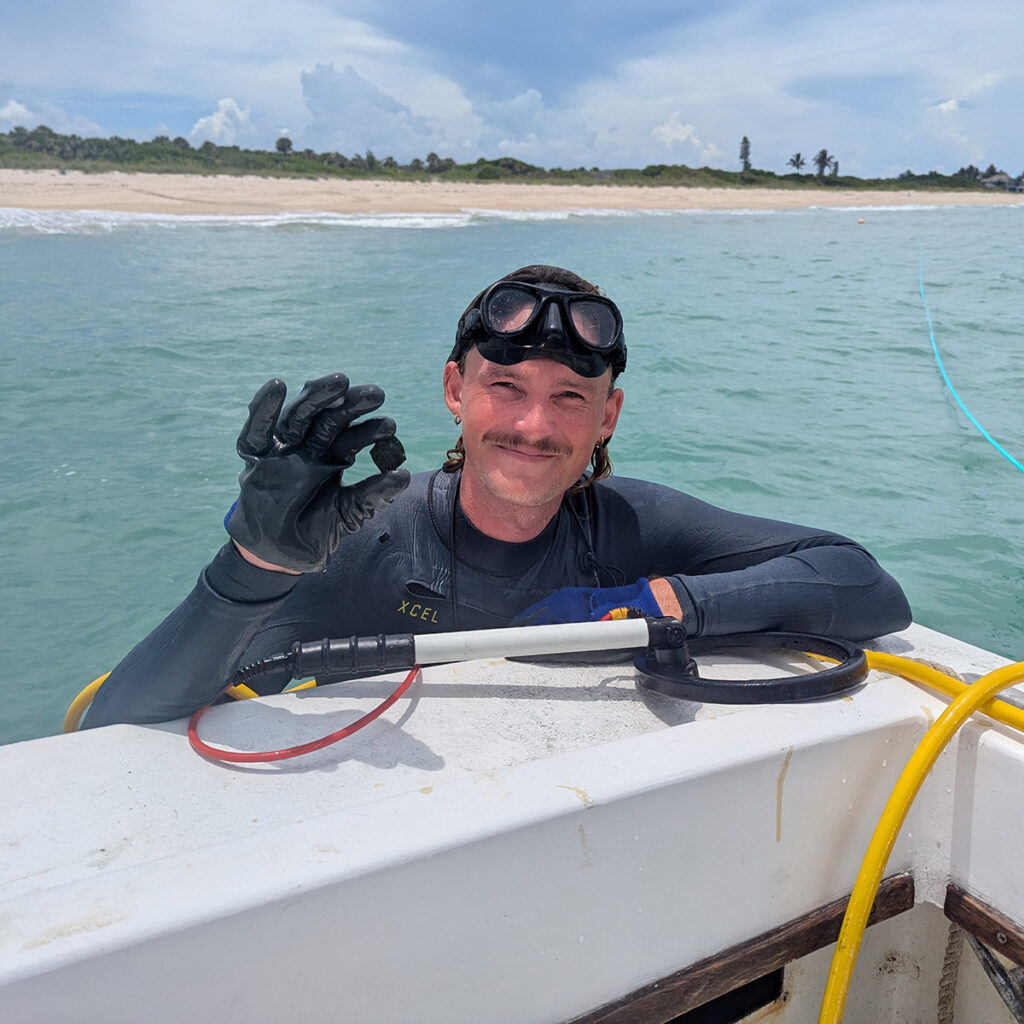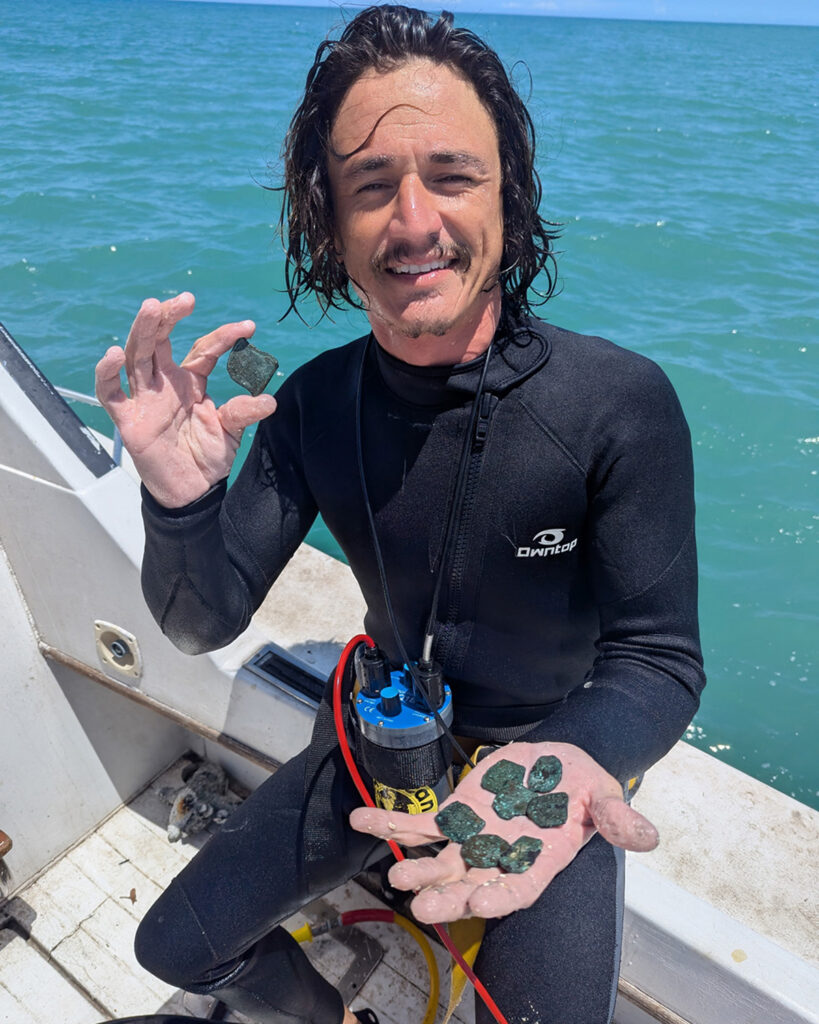
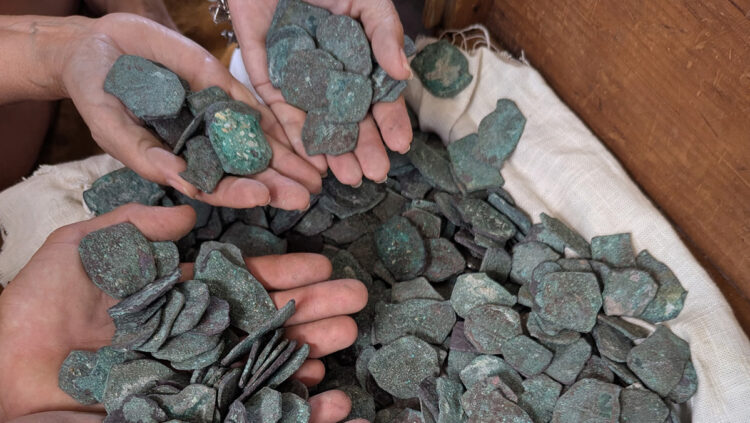
SEBASTIAN — Salvage crews have recovered more than 1,000 silver coins and five gold coins from the wreckage of the 1715 Spanish Treasure Fleet off Florida’s east coast, marking one of the largest hauls in recent years from the historic site.
The finds, including rare gold artifacts, were made during the summer salvage season by Capt. Levin Shavers and the crew of the M/V Just Right, according to 1715 Fleet – Queens Jewels, LLC, which holds exclusive rights to the site granted by U.S. District Courts.
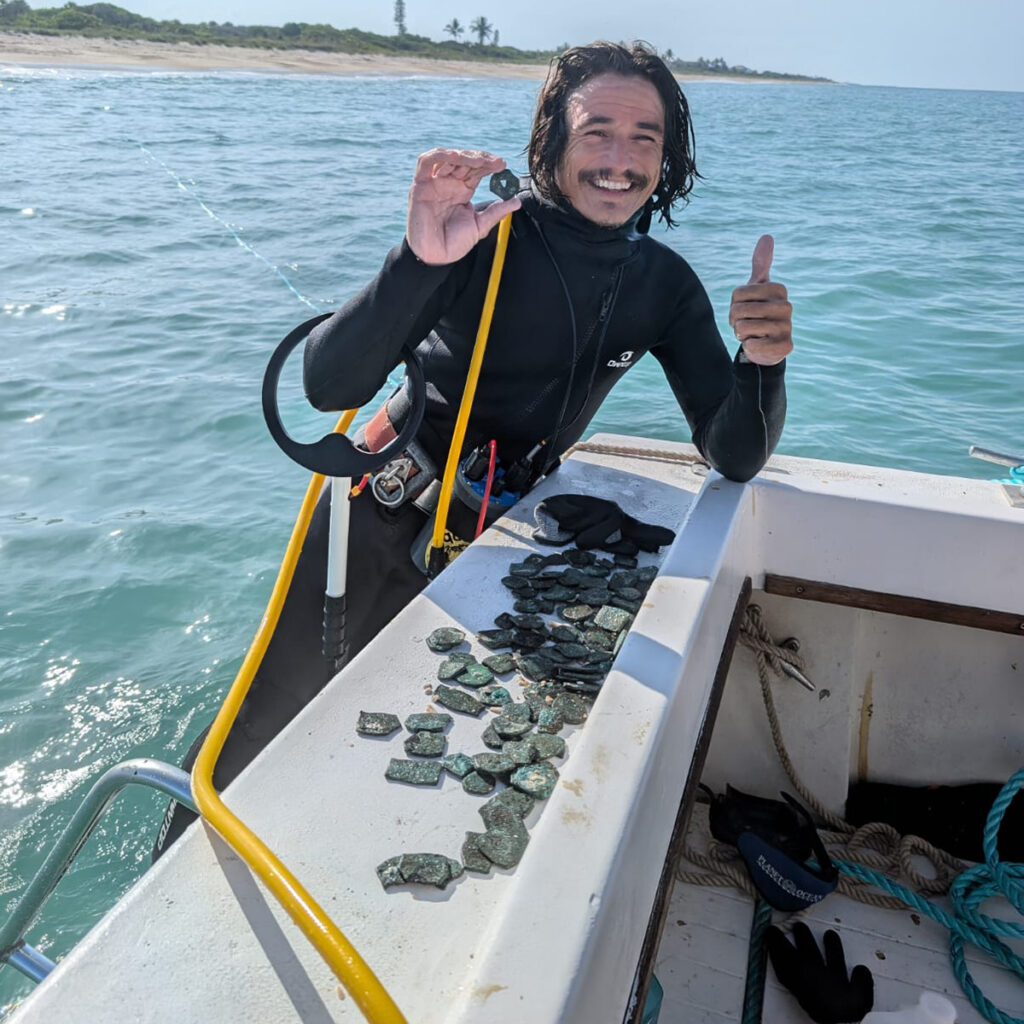
The coins, known as reales and escudos, were part of a fortune being shipped from the New World to Spain when a hurricane sank the fleet on July 31, 1715. Historians estimate the lost cargo was worth up to $400 million in today’s values, including gold, silver and jewels.
“This discovery is not only about the treasure itself, but the stories it tells,” said Sal Guttuso, the company’s director of operations. “Each coin is a piece of history, a tangible link to the people who lived, worked and sailed during the Golden Age of the Spanish Empire.”
Guttuso described the recovery of 1,000 coins in a single operation as “both rare and extraordinary.” Many of the pieces, minted in Spanish colonies such as Mexico, Peru and Bolivia, retain visible dates and mint marks, aiding historical research and appealing to collectors.

The artifacts appear to have come from a single chest or shipment that scattered during the storm, officials said. The site is in an area, dubbed Florida’s “Treasure Coast,” where operations proceed under state oversight and archaeological protocols.
“Every find helps piece together the human story of the 1715 fleet,” Guttuso added. “We are committed to preserving and studying these artifacts so future generations can appreciate their historical significance.”
The recovered items will be conserved before being put on public display. The company, which owns the salvage rights to the 1715 Fleet wreckage, plans to hold exhibitions at local museums, allowing residents and tourists to view relics from the maritime disaster.
The company will keep 80% of the recovered items, with 20% going to the state of Florida under the Abandoned Shipwreck Act of 1987.
The 1715 Spanish Treasure Fleet was devastated by a powerful hurricane on July 31, 1715, off the east coast of Florida. The fleet consisted of 11 ships (10 Spanish and one French) and had departed Havana, Cuba, on July 24, carrying a vast cargo of gold, silver, and other treasures from the New World back to Spain. One additional ship, known as the French Griffon, survived but was not carrying the Spanish treasure.
The hurricane struck around 2 a.m. with winds intensifying rapidly. The storm drove the ships onto jagged reefs along what is now Florida’s Treasure Coast, from present-day Sebastian to Fort Pierce.
By dawn, all vessels had wrecked or foundered, resulting in the deaths of nearly 1,000 people out of about 2,500 aboard. Only a few survivors made it to shore, where Spanish salvage efforts later recovered a portion of the treasure, though much remains lost or scattered on the seafloor.
The storm was a classic Cape Verde-type hurricane, originating off Africa’s west coast and intensifying as it crossed the Atlantic. It marked one of the deadliest maritime disasters of the era. Modern analyses suggest wind speeds exceeded 100 mph, with the fleet’s position in shallow waters contributing to the total loss.