

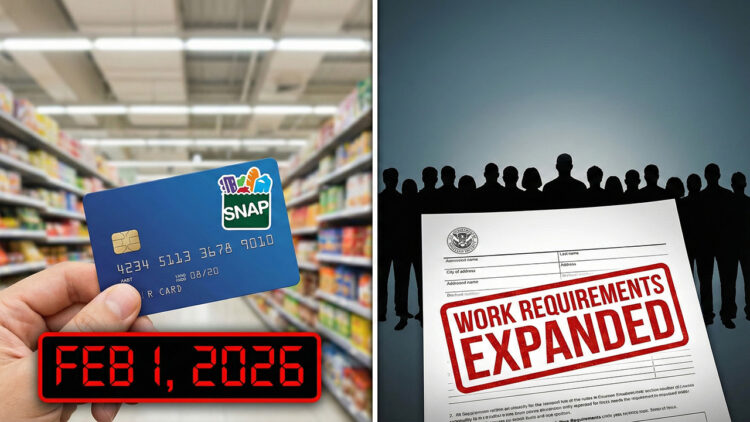
WASHINGTON — Millions of Americans who rely on food assistance are facing stricter eligibility rules as work requirements have expanded for the Supplemental Nutrition Assistance Program (SNAP), which takes effect nationwide beginning Feb. 1, 2026.
These changes stem from the “One Big Beautiful Bill,” which President Donald Trump signed into law in July 2025. The legislation expands the definition of able-bodied adults requiring them to prove they are working, in job training, or volunteering to continue receiving SNAP benefits.
In 2025, over 15,000 residents in Indian River County turned to SNAP and similar programs such as WIC, despite the many food banks available in our county.
Under the new rules, adults aged 18 to 64 without children under 14 in their household are required to work, participate in job training programs, or volunteer for at least 80 hours per month — roughly 20 hours a week — to receive SNAP benefits for more than three months in any three-year period.
Prior to the changes, it mainly applied to people aged 54 or younger. The new law will raise the age cap to 64 and ditch several exemptions, including veterans, the homeless, and former foster children. Backers argue the shift reduces dependence on public aid. Opponents say it risks deepening hunger problems as everyday expenses rise.
“This is about making sure everyone who can work does work,” said a spokesperson for the U.S. Department of Agriculture, which administers SNAP. “The program is a hand up, not a handout.”
The USDA’s Food and Nutrition Service updated its guidelines last August, noting that waivers for high-unemployment areas are now limited to regions with rates exceeding 10%, making it harder for states to opt out of the requirements. As of December, nearly 42 million people — about 12% of the U.S. population — were enrolled in SNAP, with benefits averaging $291 per person monthly.
In Illinois, local officials are raising concerns about the upcoming changes as roughly 2 million people rely on the program. Cook County Commission President Toni Preckwinkle, speaking at a news conference with health and food depository officials, stressed, “Food is not a luxury. It’s a basic human need.”
Advocates fear that the changes might unfairly impact older adults, people in rural areas with few job opportunities, and disadvantaged communities. Come May 1, those who fall short of the rules for three straight months without an exemption will lose benefits completely, putting pressure on recipients to get in line or find other help.
Exemptions still hold for people with physical or mental disabilities, those pregnant, caring for young kids or disabled family members, and participants in drug or alcohol rehab. But starting April 1, access for some immigrants—like refugees, asylum seekers, and human trafficking victims—gets curbed, squeezing the program’s scope even tighter.
All states must send written notices to enrollees and allow them to prove compliance or exemptions before revoking their aid. Recipients can comply by logging paid employment, unpaid volunteer work, or participation in SNAP-authorized job training programs.
Noncompliance with general work rules, which apply to most able-bodied recipients aged 16 to 59, can lead to disqualification for at least one month. Repeated violators risk permanent ineligibility.
The change is causing some localities to increase support. Cook County Health, for instance, is promoting “Food as Medicine” initiatives to address food insecurity through health-focused programs.
Federal officials estimate the reforms could save billions in taxpayer dollars over the next decade, but anti-hunger groups like the Greater Chicago Food Depository contend they may increase demand on food banks and pantries.
SNAP participants are recommended to connect with local offices for support in learning to track work hours, assemble records such as pay stubs, and review job training options to avoid breaks in aid as the cutoff nears.
