

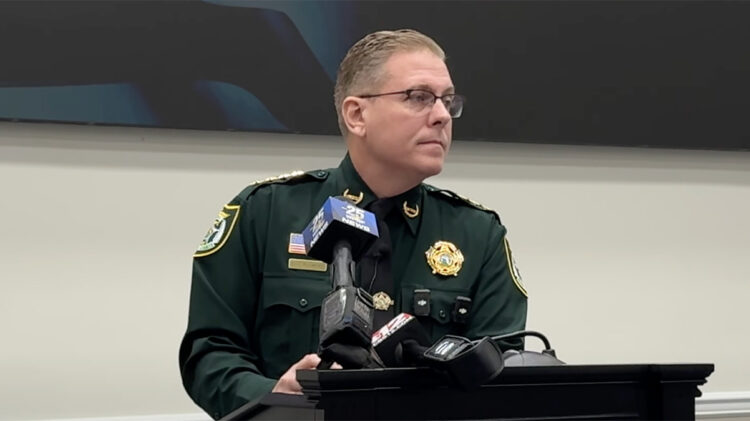
VERO BEACH — The Indian River County sheriff has filed a lawsuit against the county’s board of commissioners, accusing it of mishandling the approval process for his office’s budget and violating state law by making cuts without public discussion.
Sheriff Eric Flowers, in a complaint seeking a writ of mandamus filed this week in Indian River County Circuit Court, claims the board failed to hold proper public discussions on specific budget reductions for the upcoming fiscal year. A writ of mandamus is a court order compelling a government agency or lower court to perform a mandatory legal duty.
The suit argues that the commissioners approved a trimmed-down version of his $12.2 million budget increase without detailing which line items were altered, as required under Florida statutes.
Flowers submitted his initial budget proposal on May 1, as required by law, followed by a revised version on July 23 after requests for cuts from county officials. But during public hearings in September, the board focused only on overall totals, not individual expenditures, according to the complaint.
Instead, Flowers alleges, county administrator John Titkanich decided on the specifics, delivering a letter on Sept. 22 — signed also by board chairman Joe Flescher — outlining reductions in areas like salaries, uniforms, inmate meals and healthcare. The sheriff’s filing calls this an improper bypass of the law, which mandates that such decisions happen in open meetings under Florida’s Sunshine Law principles.
“The board must give written notice of its action to the sheriff and specify in such notice the specific items amended, modified, increased, or reduced,” the complaint states, quoting Florida Statute 30.49. It adds that the administrator’s letter does not count as official board action since it was not debated publicly.
The law details the required budget format and provides for hearings and appeals to the Administration Commission when disputes arise. This process aims to balance sheriffs’ operational independence with fiscal oversight by elected county officials. Flowers argues it is unclear how the commissioners approved the document without it being presented at a public meeting.
The dispute centers on a proposed budget increase for fiscal year 2026, which Flowers says is needed to cover rising costs for operations, personnel and equipment in his office. He provided detailed accounting as required, but the board criticized him for not breaking down some items to the “subobject” level — a granular classification like office supplies or vehicle leases — even though state law does not mandate it, the suit contends.
Flowers argues that he is left in uncertainty without proper notice and unable to appeal the cuts effectively or plan his department’s resources. He is asking the court to force the board to either issue a compliant notice detailing the changes or approve his full budget request outright. The suit also seeks attorney fees.
Under Florida law, sheriffs operate as independent constitutional officers, but their budgets are subject to county commission approval. Disputes like this can escalate to the state’s Administration Commission, which includes the governor and cabinet, if appeals are filed.
There have been ongoing tensions between the sheriff and commissioners in recent months over funding public safety amid inflation and taxpayer concerns. Indian River County’s final budget hearings wrapped up Sept. 17, setting the millage rate without raising taxes or dipping into reserves, which Flowers says forced arbitrary cuts to his proposal.
A hearing on the writ has not yet been scheduled. If granted, it could compel the board to revisit the process.
