

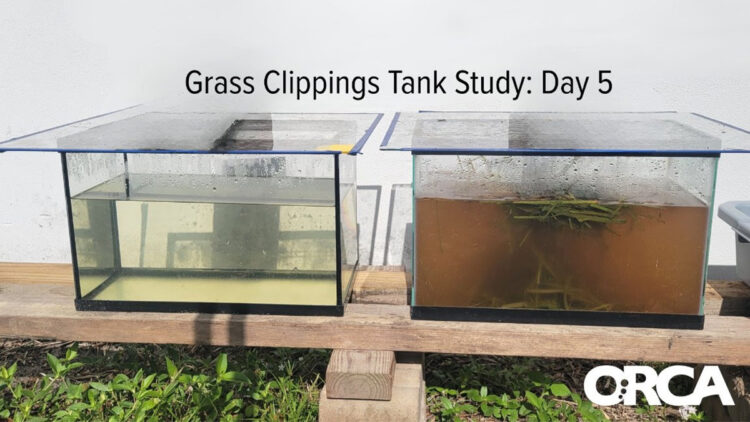
VERO BEACH — A Florida environmental group released a study showing that discarded grass clippings are a contributing factor that fuels harmful algae blooms and muck buildup in the Indian River Lagoon.
The Ocean Research & Conservation Association (ORCA) released findings from its 2025 study showing that discarded grass clippings are washing into storm drains and contributing to nutrient pollution that fuels harmful algae blooms and muck buildup in the lagoon.
ORCA researchers collected water and sediment samples across several sites in the Indian River Lagoon system during the spring and summer and determined that decomposing grass clippings.
The researchers determined that decomposing grass clippings release significant amounts of nitrogen and phosphorus. These are key ingredients for excessive algae growth that can choke out seagrass beds and disrupt marine ecosystems.
The findings build on ORCA’s long-term monitoring of pollution sources in the lagoon, which has suffered from repeated fish kills, manatee deaths and habitat loss in recent years. State officials have invested millions in restoration efforts.
ORCA’s research highlights simple fixes for homeowners. The group urges residents to mulch clippings back into the laws instead of blowing clippings into the street. Mulching them will break them down naturally in the grass and enrich the soil without harming waterways. For larger amounts, proper composting or using municipal yard waste programs is recommended.
The study comes amid positive signs for parts of the lagoon. A separate report from the Marine Resources Council earlier this year noted improved water clarity and seagrass recovery in central sections, crediting reduced fertilizer runoff and dredging projects. ORCA warns that overlooked sources like grass clippings could undermine those gains if not addressed.
Founded in 2005, ORCA uses advanced sensors and citizen science to track pollution in real time. The group’s Kilroy monitoring network, deployed across the lagoon, helped gather data for the grass clippings study by detecting nutrient surges after heavy rains.
Environmental advocates hope the findings will spur local ordinances. Some Florida counties already ban dumping yard waste in storm drains, but enforcement varies. ORCA plans community workshops in 2026 to spread the word.
The Indian River Lagoon supports a $7.6 billion annual economy through fishing, tourism and recreation, according to state estimates. Protecting it from hidden threats like grass clippings, ORCA says, is essential for the region’s future.
