

TALLAHASSEE — Florida has secured more than $38 million in federal funding from U.S. Immigration and Customs Enforcement to bolster its immigration enforcement efforts, state and federal officials announced Friday.
The funds, totaling $38,575,905, come as part of a broader $1.6 billion allocation to states and localities participating in ICE’s 287(g) program, which trains local and state law enforcement officers to assist in identifying and detaining immigrants in the country illegally. Of the amount awarded to Florida, about $28.6 million will go to state-level agencies, while roughly $10 million is earmarked for local law enforcement partners.
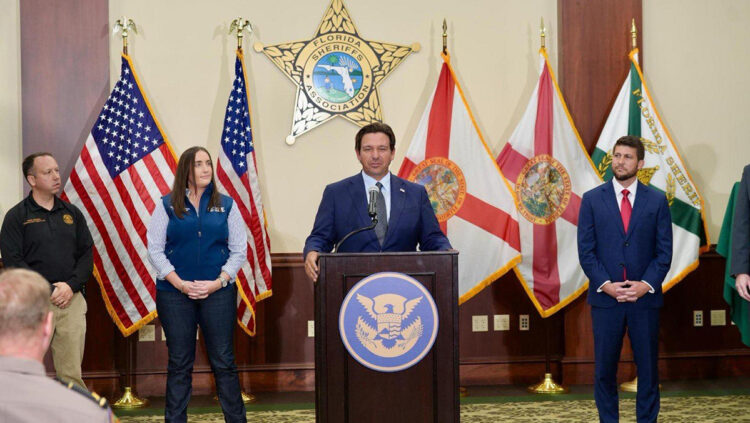
Gov. Ron DeSantis, speaking at a news conference alongside ICE Deputy Director Madison Sheahan and other officials, hailed the funding as a key step in Florida’s ongoing crackdown on illegal immigration. “With these checks, this is just the beginning,” DeSantis said. “It’s showing we’re stepping up, doing the right thing.”
The 287(g) program has credentialed more than 4,700 officers across Florida to perform immigration-related duties, allowing them to screen arrestees for immigration status and initiate deportation proceedings. The new funds will cover costs like transportation and equipment, including $2.7 million for local transport needs and $1 million for state efforts, as well as gear for nearly 1,000 local officers and over 3,600 at the state level.
Attorney General James Uthmeier echoed DeSantis’ sentiments, pledging full support for federal priorities. “Florida is all in on helping the Trump administration to deliver on their promises to secure the border for once and for all, to detain as many illegal immigrants as possible and get them back to where they came from,” Uthmeier said.
The announcement comes as Florida ramps up operations at state-run detention facilities, including the controversial “Alligator Alcatraz” in the Everglades and “Deportation Depot” in North Florida. Officials said deportation flights from these sites could increase to five per week, though details on detainees remain limited. Polk County Sheriff Grady Judd, who chairs the state’s Immigration Enforcement Council, has raised concerns about federal delays in certifying local jails for immigration detention, potentially limiting the program’s reach.
St. Johns County Sheriff Rob Hardwick urged more agencies to join the effort, noting the tangible benefits. “Our federal partners are sitting there with a checkbook ready to write. It’s not lip service, it’s real,” Hardwick said.
The funding stems from the Trump administration’s “Big Beautiful Bill,” a sweeping immigration measure that contrasts with previous federal approaches under the Biden era, which directed resources toward sheltering migrants rather than enforcement. Thirty-two local agencies in Florida have also submitted requests for an additional $10.4 million in reimbursements, with offices in Lee and St. Johns counties each seeking $1 million.
ICE officials described the awards as reimbursement for costs incurred in supporting federal immigration goals, emphasizing the program’s role in enhancing public safety. Florida’s aggressive stance on immigration has drawn both praise from conservatives and criticism from immigrant rights groups, who argue it strains local resources and communities.
