

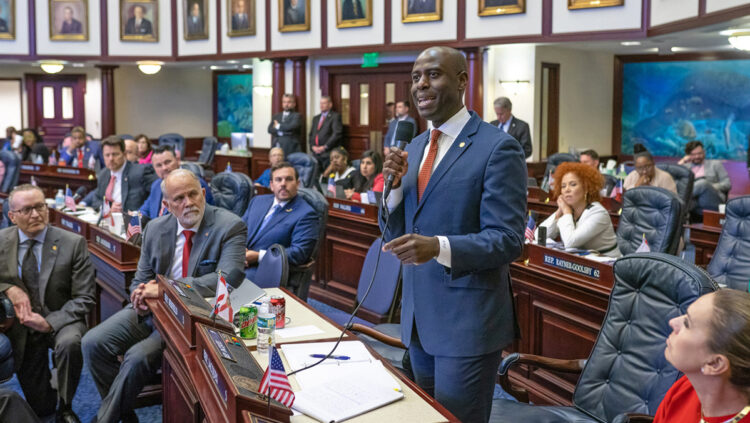
TALLAHASSEE — Florida lawmakers kicked off a deep dive into potential property tax cuts Monday, weighing everything from outright elimination to targeted rebates as they grapple with soaring homeowner costs and the risk of slashing funds for schools and public safety.
The House Select Committee on Property Taxes, a 37-member panel, convened for the first of two days of hearings to explore reforms that could reshape how the state funds local governments. Gov. Ron DeSantis has pushed for abolishing property taxes entirely, a move that would make Florida the first state to do so, but committee members heard warnings that such a drastic step could force deep cuts in essential services or require hiking other taxes.
“You buy a home, pay off a mortgage — and yet you still have to write a check to the government every year just to live on your own property? Is the property yours or are you just renting from the government?” DeSantis said during the State of the State address on March 4, 2025.
Rep. Berny Jacques, a Republican from Seminole who sits on the committee, called property taxes the most hated tax in Florida. He dismissed concerns from local officials as scare tactics, insisting the state could step in to support emergency services if needed.
The discussions come as property values have surged across the state, driving up tax bills even for homeowners protected by caps, such as the Save Our Homes amendment, which limits annual increases to 3% for homesteaded properties. In Manatee County alone, officials collected more than $1.2 billion in property taxes last year, funding everything from fire departments to libraries.
Experts and local leaders testified that property taxes generate about $50 billion statewide annually, accounting for roughly half of school district budgets on average — and even more in wealthier areas with high-value homes and fewer students. Tampa Mayor Jane Castor told the panel that her city’s property taxes don’t even cover the full cost of first responders, raising fears that elimination could lead to reduced services.
Cragin Mosteller, a spokeswoman for the Florida Association of Counties, urged a tailored approach rather than a blanket cut. She said that each community has unique needs and that they’re open to relief measures, but need to protect their everyday services.
Alternatives floated during the hearing included boosting the homestead exemption from its current $50,000 to as much as $400,000, imposing stricter caps on school-related taxes, or introducing new rebates for seniors and first-time buyers. U.S. Rep. Byron Donalds, a Republican running for governor, endorsed broader exemptions but rejected doubling the state’s 6% sales tax to offset losses, arguing it would hurt tourism.
Chief Financial Officer Blaise Ingoglia highlighted recent audits that uncovered nearly $400 million in wasteful spending in Orange County and Jacksonville, suggesting that efficiencies could help bridge any gaps without new taxes.
The committee’s work is currently informational, with no bills having been voted on yet. Lawmakers could advance proposals during the upcoming legislative session, potentially putting a constitutional amendment on the November 2026 ballot for voters to decide.
Florida’s property tax system has long been a political flashpoint, with exemptions and portability rules already reducing collections below market values. A pending bill, HJR 357, would add a $100,000 exemption for all levies if approved.
DeSantis, in a statement, reiterated his goal: “We can support police, firefighters, education, and infrastructure even with cuts — and give Floridians real relief.”
The hearings are scheduled to continue Tuesday, with additional testimony expected from economists and tax appraisers.
