

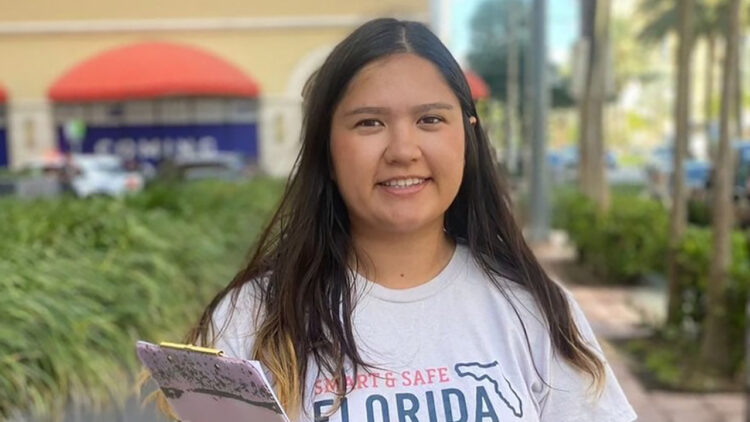
TALLAHASSEE — Florida’s push to legalize recreational marijuana is nearing a make-or-break moment, with backers racing to meet a Feb. 1 deadline for verifying hundreds of thousands of voter signatures.
The Adult Personal Use of Marijuana initiative, backed by the Smart & Safe Florida committee, needs at least 880,062 valid voter signatures verified by state officials by Feb. 1 to qualify for the November 2026 ballot. That’s the magic number needed under Florida law, based on 8% of the votes cast in the last presidential election, and signatures must also meet thresholds in at least 14 of the state’s 27 congressional districts.
As of late last week, the state’s elections website listed 675,307 valid signatures for the measure. But campaign officials insist they’ve submitted more than 1 million petitions to county supervisors, with over 700,000 already verified locally. The discrepancy has sparked a lawsuit filed Jan. 22 in Leon County circuit court, in which Smart & Safe Florida accused Secretary of State Cord Byrd of failing to update the public count weekly, as required by law, since Dec. 1.
The lawsuit asks a judge to order Byrd’s office to comply immediately, with an expedited court schedule given the imminent deadline. It’s just the latest courtroom skirmish for the campaign, which earlier won a federal injunction against a 2025 state law restricting petition gatherers, only to see a state court invalidate some signatures from out-of-state circulators and inactive voters in mid-January. Both sides have appealed that ruling.
Adding to the pressure, Florida Attorney General James Uthmeier has ramped up scrutiny of the effort, announcing 46 new investigations into alleged petition fraud on Jan. 21. His office claims 50 circulators submitted about 21,600 petitions, with 14,500 raising “significant concerns” over forged signatures, including those of deceased voters. Four criminal subpoenas have been issued to the campaign and its contractors.
Law enforcement has already arrested at least nine campaign workers on felony fraud charges, with more warrants expected this week, according to state officials. The probes stem from complaints that petitioners submitted names without consent or falsified documents.
Uthmeier, a vocal opponent of the initiative, said in a statement: “Florida’s Constitution is not for sale, and we will not allow a mega marijuana corporation to hijack our state’s governing document.”
The campaign, largely funded by Trulieve Cannabis Corp., Florida’s largest medical marijuana operator, has denied any wrongdoing. “We follow the law to the letter and cooperate fully with authorities,” Hill said. “These are politically motivated attacks aimed at derailing a popular reform.
According to Florida Trend, the proposed amendment would allow adults 21 and older to possess up to 3 ounces of marijuana, including up to 5 grams in concentrate form, for personal use if it makes the ballot. But it bans public smoking or vaping, prohibits child-appealing packaging, and keeps driving under the influence illegal. The measure doesn’t affect federal law, where marijuana remains prohibited.
Voters would need to approve it by 60% — a high bar that doomed a similar push in 2024, when Amendment 3 garnered 55.9% support but fell short.
Meanwhile, lawmakers are getting ready for potential legalization. A Senate committee this week advanced a bill to ban marijuana smoking in public places like parks and beaches, defining them broadly as anywhere the public has access.
The initiative was cleared for signature gathering by the Florida Supreme Court in January 2025, after Attorney General Uthmeier initially tried to block it.
Smart & Safe Florida has spent over $50 million on the campaign so far, mostly from Trulieve, according to state finance reports. Gov. Ron DeSantis’ administration, which is opposed, has launched ads warning of increased drug use and road dangers.
Polls show about 65% of Floridians favor legalization, but the super-majority requirement and ongoing controversies could complicate passage.
