

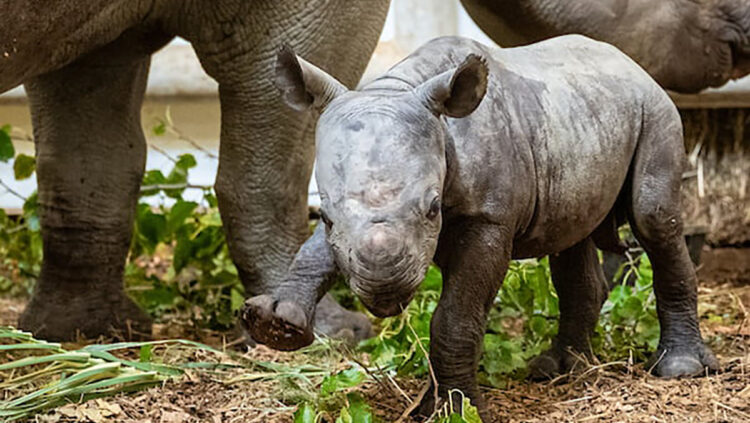
CLEVELAND — A critically endangered baby rhino made its debut Friday, dashing about its enclosure at the Cleveland Metroparks Zoo as part of an ongoing effort to save the eastern black rhino from extinction.
The male calf, born Sept. 13 to 22-year-old mother Kibibbi and 25-year-old father Forrest, weighed about 120 pounds during its first appearance to visitors at the zoo’s Daniel Maltz Rhino Reserve. Zoo officials said the birth marks a key milestone for the eastern black rhino, with fewer than 583 adults left in the wild due to poaching and habitat loss.
“He is very playful, runs around, gets the zoomies, so it’s very fun to take care of him, especially when they’re this age,” said animal keeper Stefanie Titterington as the calf explored its habitat.
Visitors like Alex Budinger, a regular zoo member, flocked to see the unnamed calf interact with enrichment items such as pumpkins. “We’re zoo members. We come here all the time, so we’re very excited that there’s a new baby to come and check out,” Budinger said. “It’s adorable and we enjoy coming and seeing it do some enrichment and chew up some pumpkins.”
The zoo is hosting a naming contest through Oct. 15, allowing guests to vote on one of three options — Makena (meaning “happy one”), Kenza (“treasure”) or Kamari (“like the moon”) — with donations supporting rhino conservation.
Cleveland Metroparks Zoo has long partnered with global organizations to protect eastern black rhinos, one of several black rhino subspecies native to Africa. The birth coincided with World Rhino Day on Sept. 22, revealing the need for conservation amid threats like organized poaching rings.
South Africa hosts more than 2,000 of the world’s roughly 6,700 remaining black rhinos, making it a critical hub for the species’ survival, though it also faces the highest poaching risks.
Zoo executive director Chris Kuhar called the calf’s arrival “a symbol of hope” for the critically endangered animal. “Every birth is significant and is an opportunity to bring awareness to the conservation issues faced by this species,” he said.
