

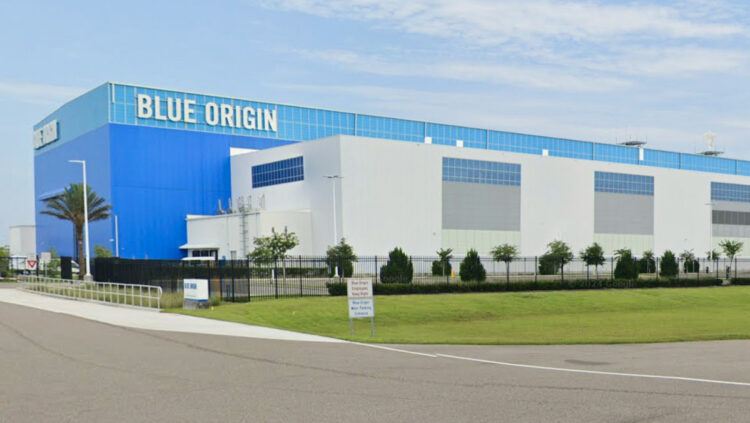
MERRITT ISLAND — Blue Origin, the aerospace company founded by Amazon billionaire Jeff Bezos, is seeking renewal of a state permit to discharge up to nearly 500,000 gallons of industrial wastewater daily into a stormwater system that flows into Florida’s ecologically fragile Indian River Lagoon, prompting concerns from environmental advocates and local officials about potential harm to the already stressed waterway.
The Florida Department of Environmental Protection issued a draft permit last month that would allow the company’s Merritt Island manufacturing facility to operate an industrial wastewater treatment plant, discharging treated effluent from rocket testing, cleaning and cooling operations into an onsite stormwater pond that ultimately drains into the lagoon.
The plan specifies a maximum of about 490,000 gallons per day overall, with up to 15,000 gallons of that being nonprocessed wastewater.
Blue Origin described the application as a routine renewal of an existing agreement in place for more than five years, adding in a statement that it is “committed to maintaining responsible and compliant operations.”
But critics argue the discharge adds to ongoing pollution pressures on the 156-mile estuary, which stretches along Florida’s Atlantic coast and supports more than 4,300 species of plants and animals, including endangered manatees. The lagoon has suffered from nutrient overload, algal blooms, seagrass die-offs and habitat loss in recent years, exacerbated by development, stormwater runoff and other industrial activities.
Stel Bailey, executive director of the nonprofit Fight for Zero and a member of the Indian River Lagoon Roundtable steering committee, described the plan as outdated and said Blue Origin should be innovating solutions rather than dumping into the lagoon.
An online petition opposing the permit has garnered nearly 5,000 signatures, calling for zero discharge into the lagoon, stricter limits and independent monitoring.
Brevard County commissioners voted unanimously Tuesday to request a public meeting from the DEP before the permit is finalized, citing local efforts to restore the lagoon through a half-cent sales tax expected to generate $586 million over 10 years for nitrogen and phosphorus reduction projects. “We’re paying to clean it up, and they’re polluting it,” said Commissioner Tom Goodson.
The DEP, which has previously fined Blue Origin for permit violations including sampling failures and pH exceedances — with a recent proposed penalty reduced from $23,450 to $5,450 after negotiations — is accepting public comments until Dec. 18. Agency officials said the draft permit includes monitoring requirements and that significant input could lead to changes.
Environmental groups like the Marine Resources Council have urged a broader review of cumulative impacts from the Space Coast’s growing aerospace sector, including nearby operations by rival SpaceX. “We need holistic planning to protect this ecosystem,” the council said in a statement.
Blue Origin’s Merritt Island site, part of its expansion for orbital rocket manufacturing, has drawn scrutiny amid Florida’s booming space industry.
The company did not provide additional details on alternative wastewater management options when asked.
