

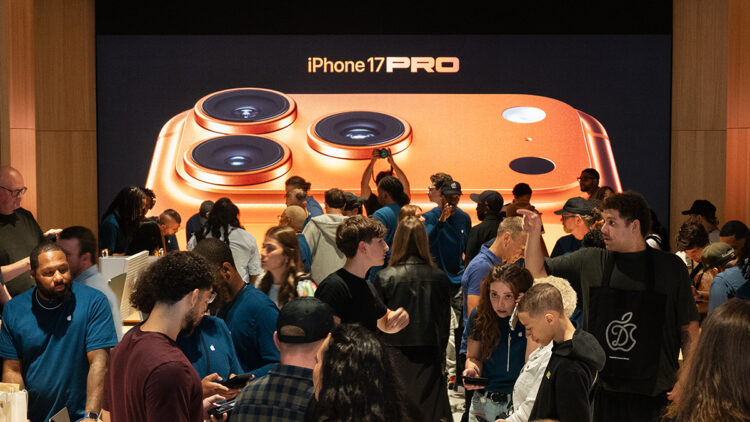
NEW YORK — A Wall Street firm has downgraded Apple Inc.’s stock, citing fading early demand for the iPhone 17 and concerns that consumers may hold off purchases in anticipation of a foldable model next year.
Jefferies Financial Group downgraded Apple’s stock to underperform from hold last Friday, only a couple of weeks after the company kicked off sales of its newest iPhone models. That decision nudged Apple’s shares down a touch during early trading, but overall, the stock has climbed roughly 14.5% so far this year—even with a dip to around $170 in April.
Analysts at Jefferies pointed to shortening delivery lead times as a key indicator of softening interest, particularly in the U.S. market across all four iPhone 17 variants. While initial orders appeared stronger than last year’s iPhone 16 rollout, the firm said momentum is waning.
“Better demand for (iPhone) 17 is likely driven by no price hike in Pro/Pro Max and effective price cut for the base, not due to new form factor or tech innovations,” Jefferies said in a note to clients.
The brokerage also expressed worry over “excessive expectations” for an iPhone 18 Fold, suggesting some buyers might skip the current cycle to wait for the rumored foldable device. Jefferies noted that Samsung’s Galaxy Z Fold 7, which is thinner than Apple’s new iPhone 17 Air when unfolded, sells only about 3 million units annually — a fraction of iPhone volumes.
Apple unveiled the iPhone 17 series on Sept. 9, highlighting features like an all-new titanium casing, the A19 Bionic chip for advanced AI capabilities, improved battery life on the Pro Max model, enhanced cameras and the slimmest design yet for the iPhone Air. Sales began later that month.
But not everyone on Wall Street is buying into Jefferies’ gloomy take. Morgan Stanley flagged demand for the phones as “modestly stronger than we originally expected,” drawing from shipping numbers and supply chain checks, and bumped up its price target on Apple stock to $298. They’re betting production will crank up past 90 million units in the back half of 2025.
Wedbush Securities, meanwhile, sees a major upgrade opportunity, estimating that 325 million iPhone users worldwide haven’t refreshed their devices in more than four years.
Apple’s stock closed at $234.35 on Monday, down 1.5% from the previous week amid broader market fluctuations. The company did not immediately respond to requests for comment.
The iPhone remains Apple’s flagship product, accounting for more than half of its revenue. Any slowdown in sales could pressure the company’s growth, especially as it pushes into AI and services to diversify beyond hardware.
